
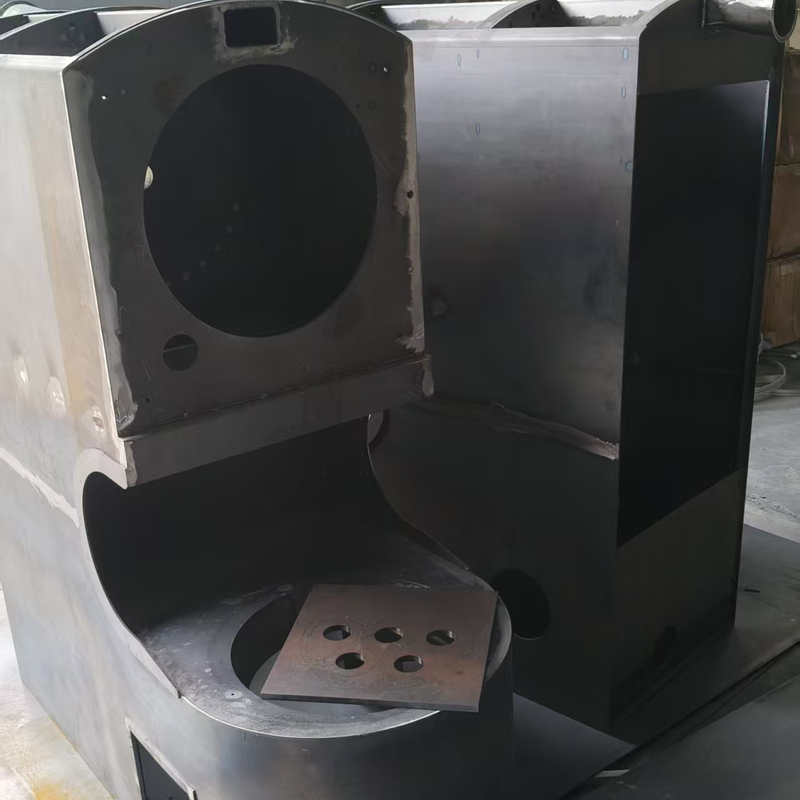
A coffee roaster is a steel box with a fire inside it. The paint, the touch screen and the wooden trim are what you see; the welds are what keep the fire where it belongs for the next ten years. On a gas machine, a weld is not a cosmetic question. It is the difference between a roaster and a leak.
Where this step sits
Welding is the third step in the sheet-metal stage, after laser cutting and CNC bending, and before grinding, finishing and paint. Everything welded here is later checked in the gas leak test and the three-stage inspection.
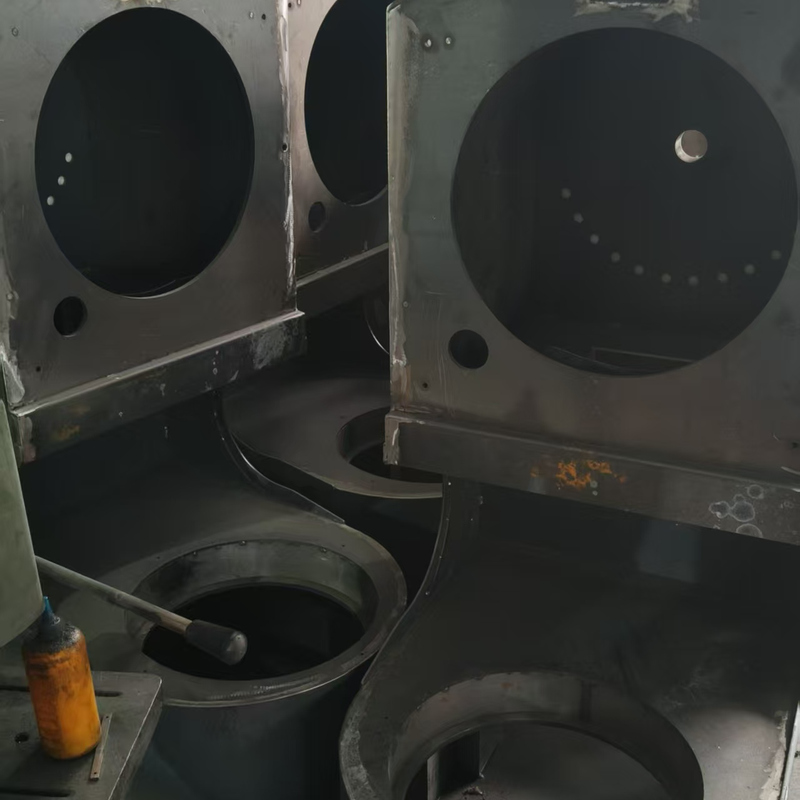
Not all welds on a roaster do the same job
We separate welds into four groups, because each one is judged differently.
1. Structural welds — the frame. The frame carries the drum, the motors, the cooling tray and, on larger machines, several hundred kilograms of cast iron. These welds are judged on strength and on not distorting the frame. A frame that twists during welding puts the drum shaft out of line, and you find out months later as bearing noise.
2. Heat-side welds — drum end plates, firebox, exhaust path. These see 300–400 °C every day and cycle from cold to hot and back. They are judged on how they handle expansion. A weld that is fine at room temperature but cracks after a few hundred thermal cycles is the classic failure on cheap roasters.
3. Gas-side welds and joints — burner mount, gas rail bracketry. Anything that carries or is next to gas. These are judged to one standard only: no leak. Fittings on the gas train itself are threaded, not welded, and each one is tested after assembly.
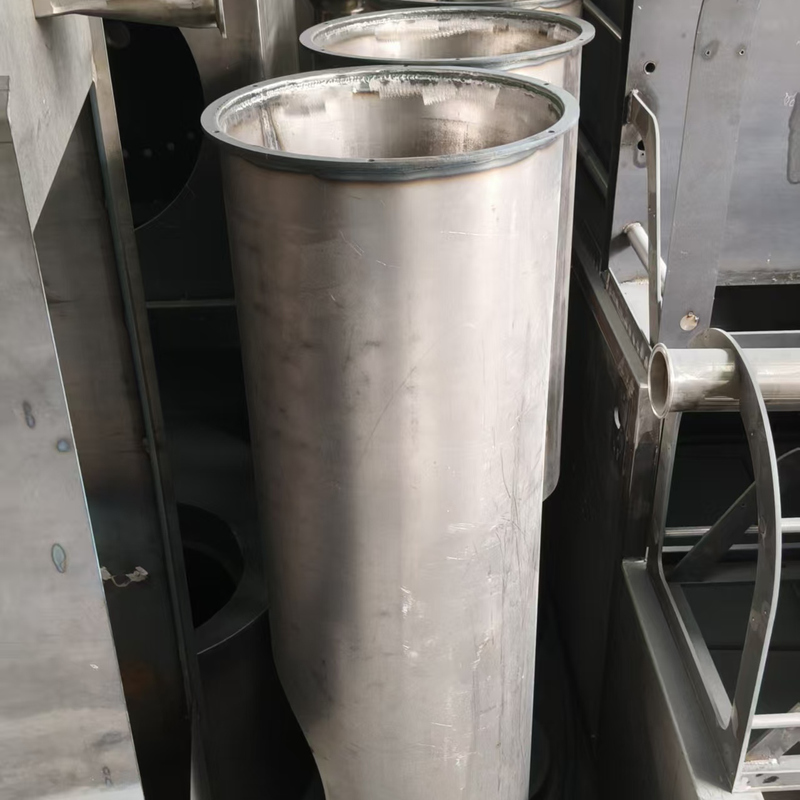
4. Cosmetic welds — panels, cyclone, hopper. Seen by your customers. Judged on appearance after grinding and brushing: no undercut, no pinholes, a seam you cannot find under the finish.
How we weld
All structural, heat-side and gas-side welding is done in our own factory by our own welders, on parts we cut and bent ourselves. That matters because the fit of the parts is half of a good weld: a panel cut to a tight tolerance sits flush, needs less filler, distorts less and grinds cleaner. The cyclone bodies and drum shells you see on this page are photographed as they come off the welding line, before any grinding or paint.
Heat-side parts are welded in a sequence that lets the assembly cool evenly, so the finished body is flat and square when the drum goes in. Frames are checked for squareness before the drum bearings are mounted — if a frame is out, it is corrected at this stage, not shimmed later.
We do not list welding process parameters on this page. If you are specifying a machine for an engineering review, ask and we will provide the material and process details for that model with the spec sheet.
What this means for you
- Safety. A gas roaster with sound gas-side and heat-side welds does not develop leaks as it ages. This is what your insurer and fire inspector are actually asking about when they ask for the machine’s documentation. See our roaster fire safety guide.
- Bearing and drum life. A square, undistorted frame keeps the drum shaft aligned, which is why bearings on a well-built roaster last years, not months.
- Appearance. Cosmetic seams that disappear under brushed stainless are the reason a machine still looks new in a café after five years.
How to verify this on any roaster
Ask the factory for two photographs of the machine you are buying, taken before paint:
- The welded frame, from the front and from one side.
- The drum end plate or firebox seam, before grinding.
You are not looking for beauty at this stage. You are looking for a continuous, even bead with no gaps, no spatter left in place, and no obvious grinding-over of a repair. A factory that welds its own machines can send these photos within a day of that machine reaching the welding line. A factory that buys bodies from a subcontractor usually cannot.
Frequently asked questions
Can a weld on the roaster be repaired locally if it ever cracks?
Yes. The body and frame are steel, and a competent local fabricator can repair a structural weld. Heat-side repairs should be done with the drum removed and the area cleaned of coffee oil first. Contact us before any repair on the gas side; we will tell you what to check afterwards.
Is the drum itself welded?
On SD and YS series machines the drum is cast iron, so the drum wall has no seam. The end plates and shaft mounts are machined and fitted, not welded to sheet. On DY and EC models the drum is 304 stainless and is seam-welded and finished. See why we cast our drums.
Do you weld stainless and mild steel differently?
Yes. Stainless panels, cyclones and hoppers are welded with stainless filler and finished so the seam takes the same brushed texture as the panel. Mild steel structural parts are welded, ground and powder-coated. Mixing the two incorrectly leads to corrosion at the joint, which is one of the things the material page covers.
What happens if a weld fails inspection?
It is cut out and redone before the assembly moves to the next stage. Every machine is inspected at least three times before shipping, and the first of those inspections is on the welded body before paint, when a defect is still cheap to fix.
Final thoughts
The welds on your roaster will outlast the paint, the screen and probably the building. That is why we show them before the finish goes on, and why the gas leak test and the burner assembly page both start from the assumption that the body underneath is sound. Choose your model from the SD series, or go back to the full build sequence.
Tell us your country, voltage, gas type and kilograms per week — we will send the matching spec sheet, and pre-paint photos of your machine once it is on the line. Request the spec sheet · WhatsApp: +86 184 0771 4607
Last updated: September 15, 2026