
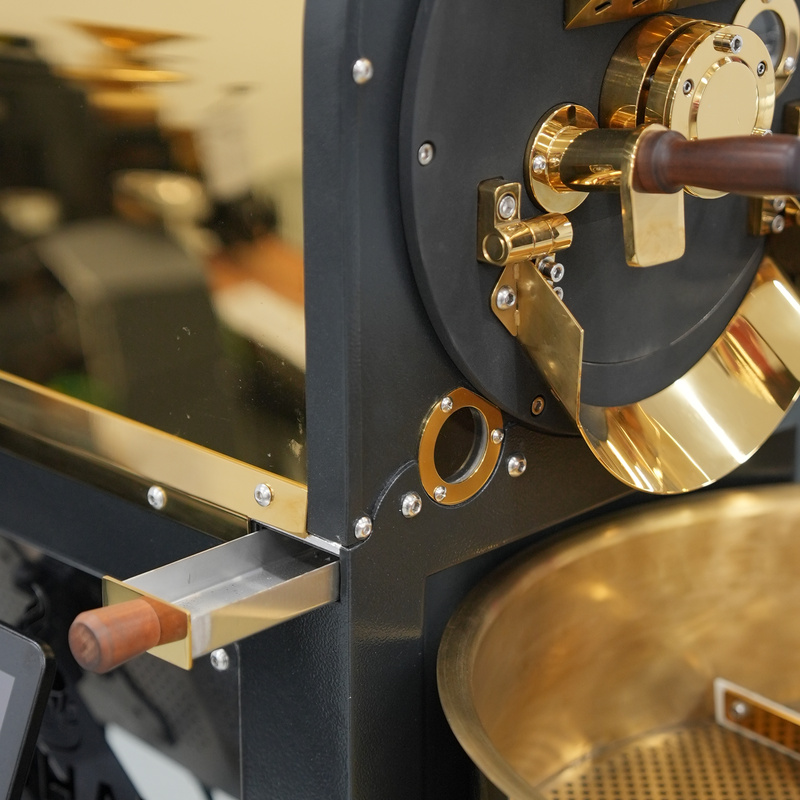
If you have roasted on a light drum, you know the problem. The first batch of the morning is fine. The third batch, charged at the same temperature, turns a minute early. By the afternoon you are chasing the curve instead of following it. Very often the reason is not your profile. It is the mass of metal the coffee is sitting in.
Where this step sits
This is the second step in our build, right after material selection and before drum machining. It is also the step that decides more about how the finished machine roasts than any other.
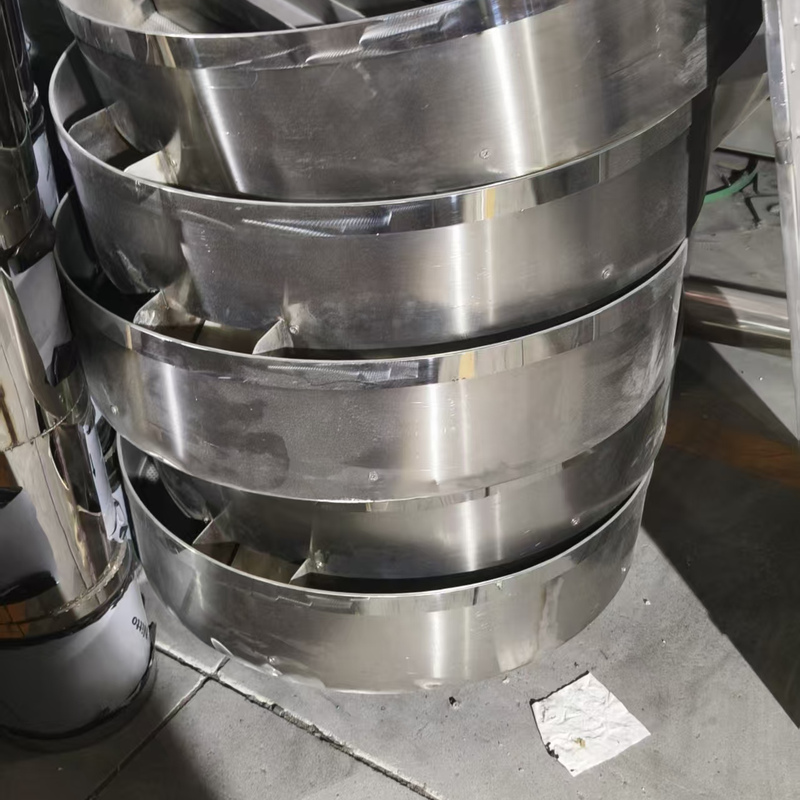
Two ways to make a drum
A roaster drum can be made in two ways.
Rolled sheet. A sheet of stainless or mild steel is rolled into a cylinder, seam-welded, and end plates are welded on. It is fast, light and cheap. Wall thickness is typically the sheet gauge — a few millimetres at most.
Cast iron. Molten iron is poured into a mould shaped as the drum, cooled, then machined to final dimensions. The wall can be as thick as the design calls for, and the metal is one continuous piece with no longitudinal seam.
On our SD series and YS series roasters, from the 1.5 kg SD up to industrial sizes, the drum is cast iron and so is the roaster body. On the DY series and the EC-500G sample roaster we use a 304 food-grade stainless drum, because at that size and for that use a lighter drum with faster response is the right choice. We are specific about this because “cast iron drum” is a phrase that gets attached to machines that do not have one.
What a heavy cast drum does during a roast
Three things happen inside a thick iron drum that do not happen the same way in thin sheet.
Turnaround is shallower and more predictable. When you charge cold green coffee into a hot drum, the bean probe drops, bottoms out, and climbs again. With a light drum, most of the heat the beans absorb in those first seconds comes from the air and the burner, and the drop is deep. A heavy cast drum has stored heat in the metal itself, so the bottom of the turnaround comes sooner and at a higher temperature. Your profile starts from a more stable point every time.
Batch-to-batch drift is smaller. Between batches the drum keeps its temperature. Charging batch four into a drum that is at nearly the same temperature as batch one means the same profile produces the same result. This is what people mean by consistency, and it is a property of thermal mass, not of software.
Conductive heat is steadier. Beans in contact with the drum wall receive heat by conduction. A thick wall at a stable temperature transfers that heat evenly. A thin wall follows the flame more closely, which is why light drums scorch more easily when the burner is high.
The cost of all this is mass — a cast drum takes longer to preheat, and the machine is heavier to ship. We think that is the right trade for a machine that roasts for a business every day. Our roasters run semi-hot-air, half direct-fire, with drum temperature adjustable from 0 to 400 °C, and the cast drum is what lets that range be used without hot spots.
How the drum is made in our plant
The drum and roaster body are cast in our own factory. After casting, the drum is rested to relieve internal stress, then bored and turned so that it runs true on its shaft and keeps a controlled clearance to the front plate. The machining and balancing steps have their own pages. We do not publish the casting parameters here; if you are an engineer who wants them for a specific model, ask and we will send them with the spec sheet.
What this means for you
- You can develop a profile on a Monday and repeat it on Friday without re-learning the machine.
- A production roaster in the YS or SD series can run batch after batch for a full shift; the drum does not need to “recover” between roasts.
- Scorching from drum contact is less likely at higher charge temperatures, which gives you room to roast denser, higher-grown coffees.
How to verify this on any roaster, including ours
Ask any manufacturer for two numbers on the exact model you are considering:
- Drum wall thickness and drum material. Cast iron drums are measured in many millimetres. Rolled sheet drums are measured in a few.
- Turnaround point on a standard charge. Ask for the bean temperature at the bottom of the turnaround for a full batch charged at their recommended temperature. A heavy drum turns higher and sooner.
If a seller will only say “heavy duty” or “thick drum” without a number, treat that as your answer.
Frequently asked questions
Does a cast iron drum rust?
The drum runs at roasting temperature every day, which keeps it dry, and a light coating of coffee oils builds up during the first batches — which is why we recommend seasoning batches on a new machine. Between uses, keep the drum closed and the room dry. Iron drums in daily roasteries run for many years without corrosion problems.
Is a heavy drum slower to heat up?
Yes, preheat takes longer than on a thin-drum machine of the same size. Most of our customers preheat while they weigh and stage green coffee. Once at temperature, the stored heat is exactly what makes the rest of the day consistent.
Which Yoshan models have cast iron drums?
The SD series (from SD-1.5 upward) and the YS series (YS-6, YS-12, YS-15 and the industrial YS sizes). The DY-1, DY-2 and the EC-500G sample roaster use a 304 stainless steel drum. See the SD series, YS series and DY series pages for each model.
Can a cast drum crack?
A properly cast and stress-relieved drum running within its temperature range does not crack in service. The failure cases we have seen in the industry involve thermal shock — quenching a very hot drum with water. Our operator training covers this, and it is listed in the manual.
Final thoughts
Repeatability is something you buy in metal, not in a menu setting. The cast drum is the reason a profile you develop on a Yoshan SD or YS roaster holds from batch to batch. The next page shows how that drum is machined and fitted, or you can go back to the full build sequence.
Tell us your country, voltage, gas type and kilograms per week — we will send the matching spec sheet with drum material and wall thickness for that model. Request the spec sheet · WhatsApp: +86 184 0771 4607
Last updated: September 17, 2026