
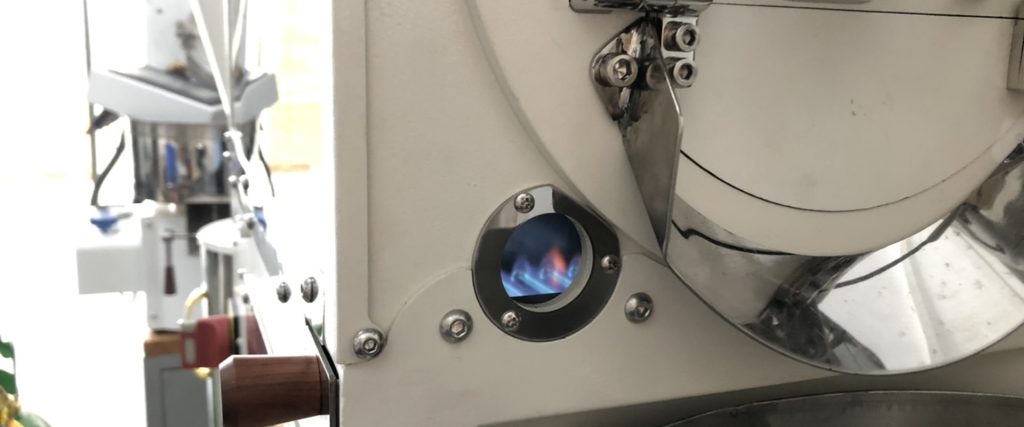
The most expensive mistake in importing a gas roaster is a cheap part: a nozzle drilled for the wrong gas. The machine arrives, the gas fitter connects it, the flame is either lazy and yellow or roaring and lifting off the burner, and nobody local wants to touch a Chinese appliance. That is why we set the burner train for your gas before the machine is crated, not after it lands.
Where this step sits
Burner assembly is the first assembly step after the body comes back from powder coating. It is followed by the control panel and wiring, and every gas train is checked in the gas leak and pressure test before the first test roast.
LPG and natural gas are not interchangeable
Both fuels burn in the same burner, but not through the same nozzle at the same pressure.
- LPG (propane/butane) has a higher energy content per cubic metre and is supplied at higher pressure. It needs a smaller nozzle orifice.
- Natural gas has lower energy density and is supplied at lower pressure. It needs a larger orifice to deliver the same heat.
Put a natural-gas nozzle on LPG and the flame is oversized and unstable. Put an LPG nozzle on natural gas and the roaster never reaches temperature. Every Yoshan gas roaster, from the SD-1.5 to industrial sizes, is available in LPG or natural gas; the choice is fixed when we build the burner train, and the nozzle for your gas ships fitted.
What is on the gas train
Working from the wall to the flame:
- Inlet connection. A threaded connector sized for the machine — for example 3/8″ on the SD-100G sample roaster; larger machines use larger fittings. Your gas fitter connects the supply here.
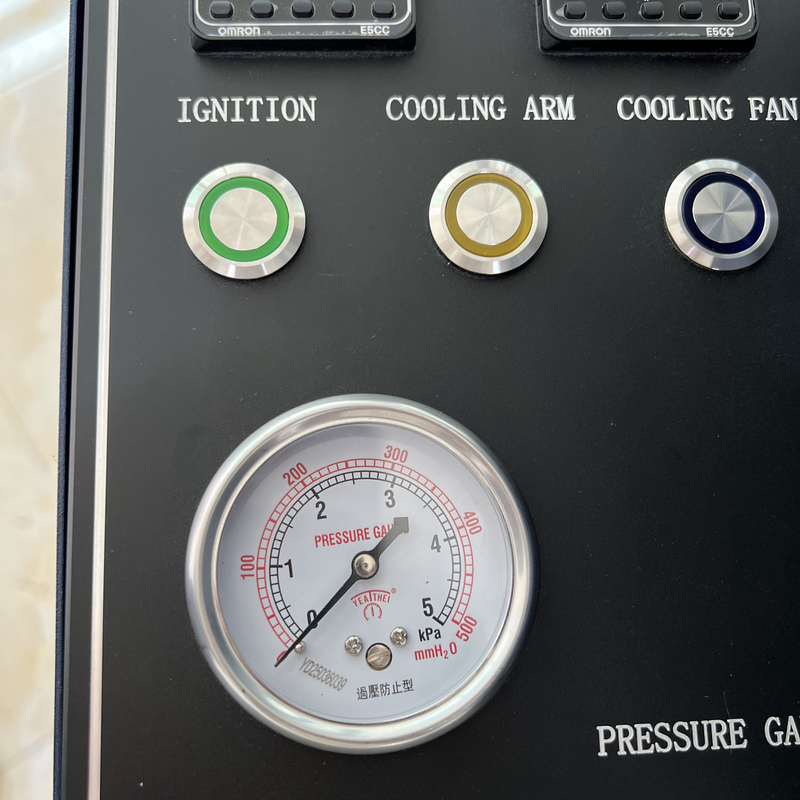
- Regulator and pressure gauge. The gauge is mounted where you can read it during roasting. Gas pressure is one of the numbers a good operator watches, because a change in supply pressure shows up in the roast before it shows up anywhere else.
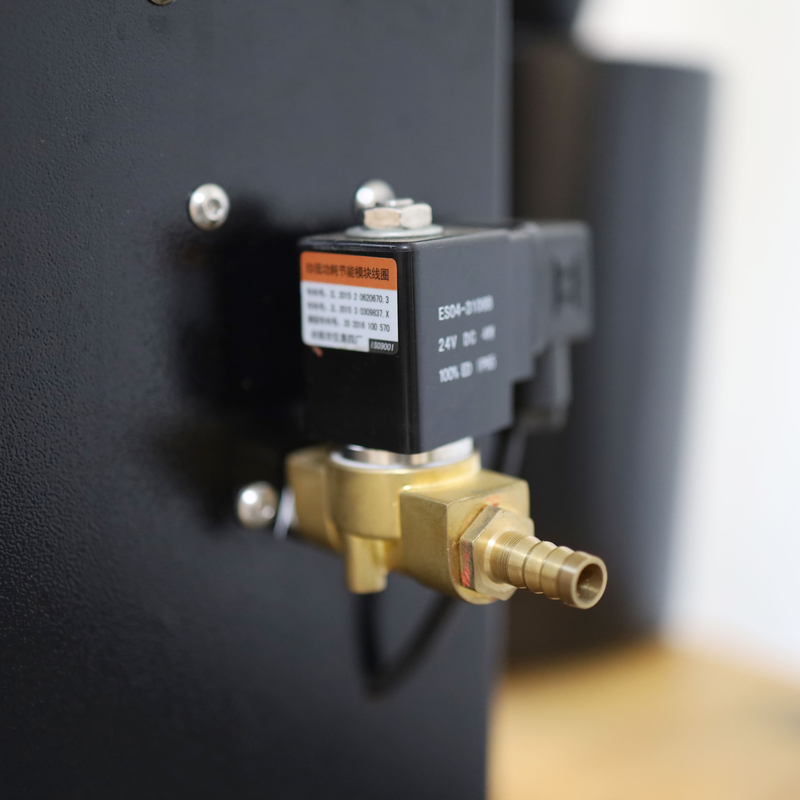
- Solenoid valve. An electrically operated shut-off that closes the gas when the machine is switched off, when the flame is lost, or when power fails. The brass-bodied valve in the photos is the part that makes the machine safe to leave running unattended for the length of a roast.
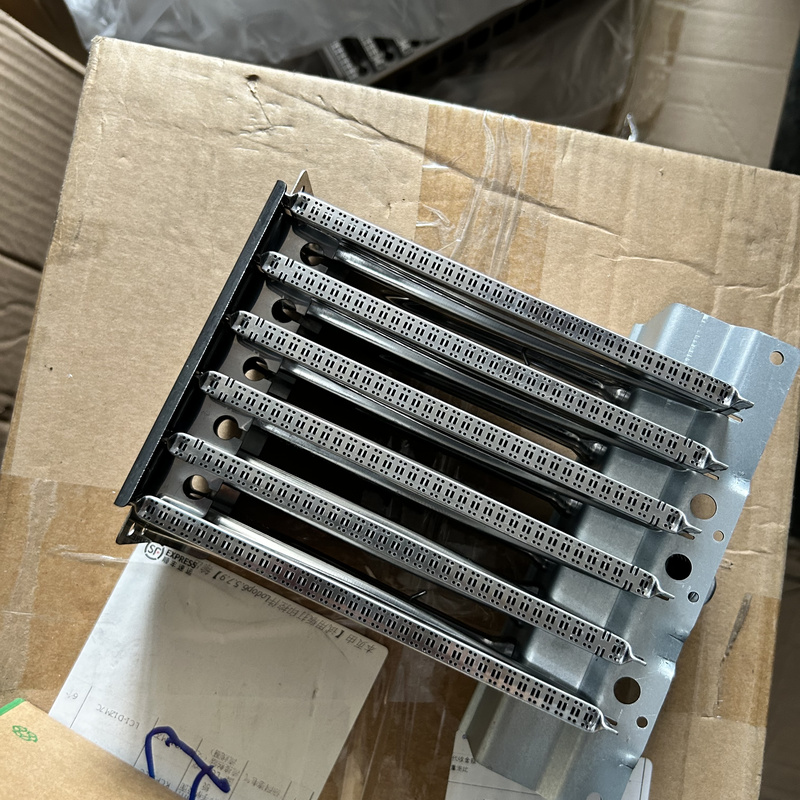
- Burner and nozzle. On the largest full-hot-air machines — SD-30 Pro and above, YS-120 and above — the burner is a Weishaupt unit; on the 1–20 kg range it is a rail-type burner as shown. The nozzle fitted matches the gas you told us at order.
- Ignition and flame supervision. Electronic ignition; the flame is monitored so the solenoid closes if it goes out.
How we set it for your country
When you order, we ask for three things: your gas type, your supply pressure if you know it, and your country. From those we fit the nozzle, set the regulator, and record the settings on the machine’s inspection sheet. The machine is then run on that gas in our plant — heat-up test and test roast — so that what you receive has already burned the gas you will use.
The accessories in the crate include a spare gas appliance nozzle, pipe grommets and a copper pipe sleeve set, so your gas fitter has the parts for a clean installation on day one. See what is in the crate.
What this means for you
- No local conversion. The machine connects to your supply and lights.
- Predictable fuel cost. Consumption figures on our spec sheets — for example 1.5 kg/h LPG or 4 m³/h natural gas on the SD-15 Pro — are for the fitted configuration, so you can estimate running cost before you buy.
- A safe machine. Solenoid shut-off and flame supervision are standard, not options.
How to verify this on any roaster
Ask the seller: which gas is this specific machine configured for, what nozzle is fitted, and can they send a photo of the gas train with the pressure gauge and solenoid valve visible. If the answer is “it works with both”, ask how — a burner that “works with both” without a nozzle change is not correctly set for either.
Frequently asked questions
Can I change from LPG to natural gas later?
Yes. The change requires the correct nozzle for the new gas and a regulator adjustment. We supply the nozzle and the instructions, and recommend a licensed gas fitter does the changeover and a leak test.
My supply pressure is low. Will the roaster reach temperature?
Natural-gas machines need a supply of at least 3 kPa at the inlet; the SD-3 Pro is set for 6 kPa on natural gas and 5 kPa on LPG. Tell us your pressure when you order. Where the supply is below that — a customer in the Philippines could only reach 2 kPa on LPG — we advise on a regulator or booster before the machine ships rather than after.
What size gas connection do I need to prepare?
It depends on the model — small machines use 3/8″ connections and larger machines use larger fittings. The connection size is on the spec sheet for your model so your gas fitter can prepare the supply line before the crate arrives.
Is an electric version available if I cannot get gas?
Yes. The DY-1, DY-2, SD-3, YS-6 and YS-12 are available in electric heating, and the EC-500G sample roaster is electric only. Electric machines ship without a plug (the EC-500G excepted) and must be connected through a residual-current device by your electrician. Our gas vs electric guide explains the trade-offs.
Final thoughts
A roaster’s burner is set once, correctly, at the factory — or it is set by trial and error in your building. We prefer the first. The next page shows how the control panel is wired for your voltage, and the gas leak test shows how every train is checked. Models are listed in the SD series, or return to the full build sequence.
Tell us your country, voltage, gas type and kilograms per week — we will send the matching spec sheet with the gas connection size and consumption for that model. Request the spec sheet · WhatsApp: +86 184 0771 4607
Last updated: September 22, 2026