
Almost every guide on how to buy green coffee beans for a roastery assumes you are in the United States or Europe, buying from an importer's warehouse. Many of the roasteries we build machines for are in producing countries — Colombia, Ethiopia, Kenya, the Philippines — where the supply chain runs the other way. This guide covers both routes, then the questions that apply everywhere: bag sizes, minimum orders, contract types, how to judge a sample, and how many bags to hold for the roaster you are buying.
First question: producing country or consuming country?
In a consuming country — the Gulf, most of Asia outside the growing belt, Europe, North America — green coffee reaches you through an importer who has already cleared it, stored it and split it into lots. You buy by the bag from their list, sometimes by the single bag from a reseller, and the importer carries the shipping risk.
In a producing country, the importer does not exist. You buy from a cooperative, a dry mill, an exporter selling domestically, or an auction, and the coffee may come to you in parchment or already milled. Prices are lower per kilo, quality control is yours, and the minimum is often set by the producer's lot size rather than by a warehouse rule.
Importing directly from a producing country into a consuming one is a third route — lowest price per kilo, highest risk — and not the place to start: you carry the freight, the customs paperwork, the quality claim if the lot arrives wrong, and the cash for a container. Most roasteries move to it only after a year or two of buying through importers.
Bags, weights and minimums
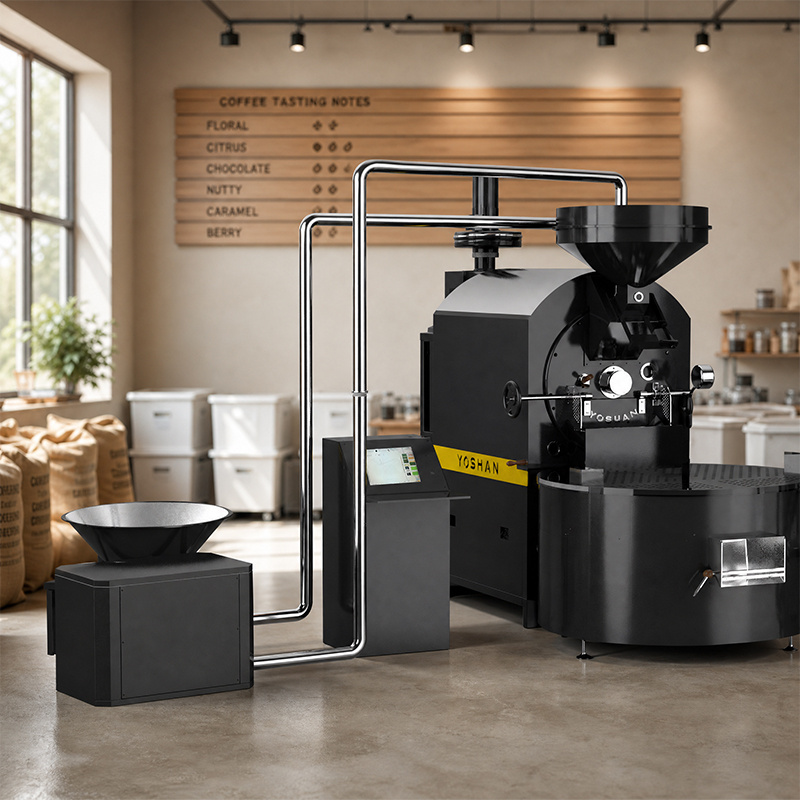
Green coffee moves in jute or sisal bags, sometimes with a plastic liner, and the bag weight depends on origin: roughly 60 kg from most of Africa and Central America, 69–70 kg from Colombia, about 59–60 kg from Brazil. Micro-lots increasingly come vacuum-packed in 30 kg boxes.
Importers rarely have a formal minimum but they sell by the whole bag; some resellers split bags into 5–20 kg cartons at a higher price per kilo, and once a single coffee passes about 25 kg a month it is cheaper to buy the bag. Exporters in producing countries commonly ask for a first order of 5–10 bags of a lot. Freight adds surcharges for pallets that need a tail-lift and for deliveries without a loading dock — worth checking before the first order arrives at a shop door.
| Route | Typical unit | Typical minimum | Lead time | Who carries quality risk |
|---|---|---|---|---|
| Importer warehouse | 60–70 kg bag | 1 bag; splits available | 5–10 working days in-country | Importer, until you accept the sample |
| Reseller / online | 5–20 kg carton | None | Days | Reseller |
| Cooperative / exporter (producing country) | Bag or lot | 5–10 bags common | Days to weeks | You, from the sample onward |
| Direct import | Pallet to container | Often a pallet | 2–6 weeks from origin | You |
Spot, forward and how the money flows
Importers offer coffee three ways. Spot is coffee already in the warehouse — buy it, pay it, roast it. A forward or period contract commits you to a quantity over several months at a fixed price, drawn down bag by bag; the importer holds the rest and charges a small monthly storage fee, typically for up to a few months, so you can secure a coffee you will need all year without paying for it all in January. Pre-shipment contracts lock a lot before it leaves origin, at the best price and the longest wait.
New accounts usually pay in advance for the first few orders before terms are offered. In a producing country, cooperatives generally want payment at collection, and price moves with the local harvest rather than with a warehouse list.
How to judge a sample before you buy the bag
Importers send small samples free or nearly so; ask for three or four candidates for each slot on your menu rather than a dozen, and ask the importer to shortlist for you — they know which lots are moving.
- Roast the sample on a sample roaster, not on the production machine: 100–500 g at a time, the same profile for every candidate, logged. Our SD 100G handles 100–120 g per batch and the electric EC-500G 200–500 g with a data logger, so the comparison is between coffees, not between roasts.
- Cup blind against a coffee you already sell, scoring sweetness first, then acidity, then body. The routine is in cupping lab and quality control.
- Check the green: uniform size and colour, few defects, no musty smell, moisture inside the 10–12% band importers quote. A lot that cups well but looks uneven will roast unevenly on a big drum.
- Roast a production-size test before committing to more than a bag or two — behaviour at 6 kg is not always the behaviour at 200 g.
A stock formula for the roaster you are buying
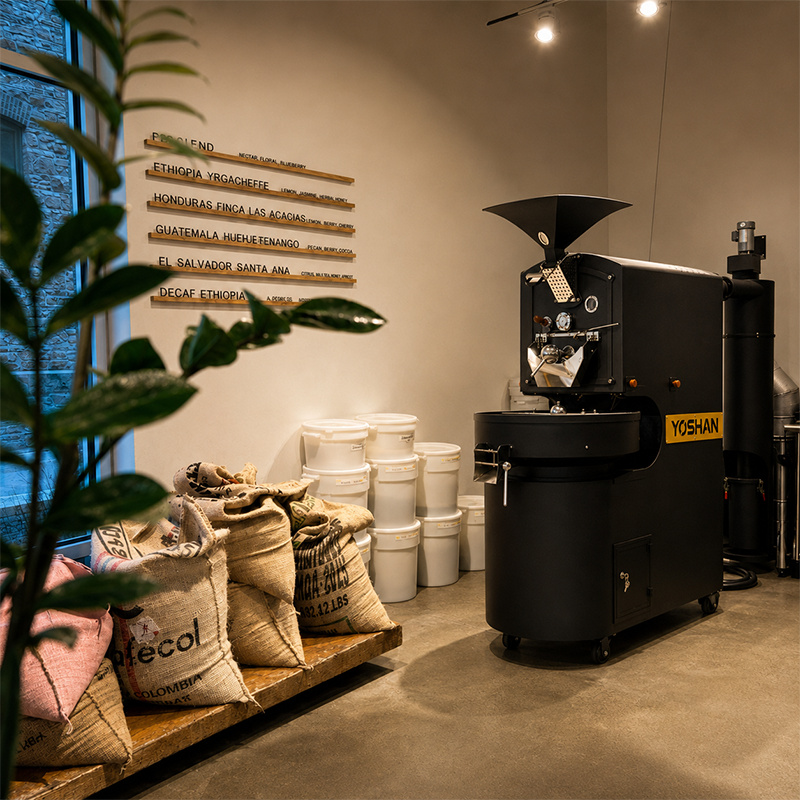
How many bags to hold is a function of the machine's throughput and how long you can keep green coffee fresh — most importers say use it within about six months of landing, sooner in the tropics without climate control.
Bags per coffee = weekly roasted kilos of that coffee ÷ 0.85 ÷ bag weight × weeks between deliveries.
The 0.85 converts roasted demand back to green at 15% weight loss; the arithmetic is in coffee roasting weight loss. A roastery selling 40 kg a week of its house espresso, on 60 kg bags, delivering every four weeks: 40 ÷ 0.85 ÷ 60 × 4 ≈ 3.1 — hold four bags, reorder at two. Add the rule of thumb importers use: at least two bags of any coffee you list, so one lot does not run out between deliveries.
Scale that to the machine. A 6 kg roaster running 20 hours a week produces roughly 300–350 kg of roasted coffee; that is 350–400 kg of green a week, six to seven bags, and a stock of four weeks means 25–30 bags on the floor — around two tonnes on pallets, which is why green storage takes more floor space than the roaster does. The floor area and conditions are in green coffee storage, and matching the machine to the volume is in the coffee roaster batch size guide.
Storage: the part tropical roasteries cannot skip
Importers quote 15–21 °C and 50–60% relative humidity for the warehouse. In Manila, Jeddah or Bogotá a shop back room is nowhere near that, and green coffee held at 30 °C and 80% humidity fades in weeks and can mould. A sealed room with a dehumidifier, bags off the floor on pallets, and stock rotated first-in-first-out is the minimum; a chilled container is common for larger roasteries in hot climates. Buy for shorter cycles — three-week deliveries rather than six — before you buy a bigger store.
FAQ
Where does a new coffee roastery buy green coffee?
In a consuming country, from a green-coffee importer's warehouse list, or from a reseller in small cartons until volume justifies whole bags. In a producing country, from cooperatives, dry mills, exporters selling domestically or auctions. Direct import from origin is a later step once volume and cash allow it.
What is the minimum order for green coffee?
Importers sell by the whole bag — about 60 kg from Africa and Central America, 69–70 kg from Colombia — but rarely enforce a minimum number of bags; resellers split bags into 5–20 kg cartons at a higher price. Exporters at origin often ask for 5–10 bags as a first order.
Should I buy green coffee spot or on a forward contract?
Spot for coffees you are trialling and for small volumes; a forward or period contract for the house coffees you will need all year, so the price is fixed and the importer holds the bags while you draw them down for a small monthly storage fee. Most roasteries run both.
How many bags of green coffee should a roastery keep?
Weekly roasted kilos of each coffee ÷ 0.85 ÷ bag weight × weeks between deliveries, with a minimum of two bags per listed coffee. Keep total green stock within about six months of use, and less in hot, humid climates without a controlled store.
How do I evaluate a green coffee sample?
Roast every candidate on a sample roaster with the same logged profile, cup them blind against a coffee you already sell, inspect the green for uniformity and defects, and run a production-size batch before committing to more than a bag or two. Sample roasters take 100–500 g per batch for exactly this job.
Does the roaster size affect how much green coffee I buy?
Yes, directly. A 6 kg machine at 20 hours a week uses six to seven bags of green weekly, so four weeks of stock is 25–30 bags on the floor. Size the store and the buying cycle to the machine before it arrives.
Final Thoughts
Buy green coffee by the route your country gives you, in bags sized to the machine's weekly throughput, and evaluate every lot on a sample roaster before it goes in the drum. We build the sample coffee roasters for that step and the production commercial coffee roasters the stock formula is sized around; tell us your weekly volume and we will size both.
Get a quote or message Leon on WhatsApp at +86 184 0771 4607.
Get a Quote → WhatsApp +86 184 0771 4607Last updated: September 23, 2026
Pingback: 100 g or 500 g Sample Roaster: Which One Your Buying Needs | Yoshan
Pingback: Coffee Degassing Before Packaging: A Roastery Schedule
Pingback: Green Coffee Moisture, Density & Water Activity Checks