
By the time a machine reaches final assembly, the hard parts are done: the drum is cast, machined and balanced; the body is welded and finished; the burner and panel are fitted. What goes on now is everything that handles the coffee after the drum — and it is where a roast that was perfect at the drop can still be spoiled.
Where this step sits
Final assembly follows the drive system and precedes the assembled-machine tests: gas leak, electrical, heat-up and the test roast. It is the last building step before the second of the three inspections.
What is fitted
Chaff cyclone. The exhaust from the drum carries chaff — the papery skin that separates from beans as they roast. The cyclone spins it out of the airstream into a collector bin before the air goes to the stack. On our machines the collector is separate from the roaster body, so it can be emptied without stopping and heat is not trapped against the machine. A cyclone that does not collect chaff sends it up the flue, where it is a fire risk.
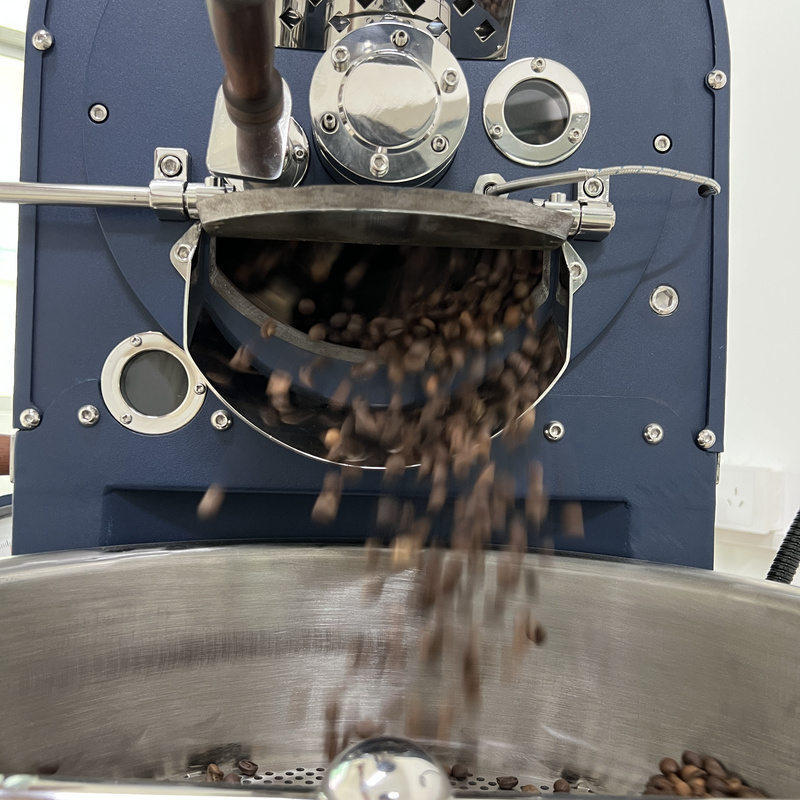
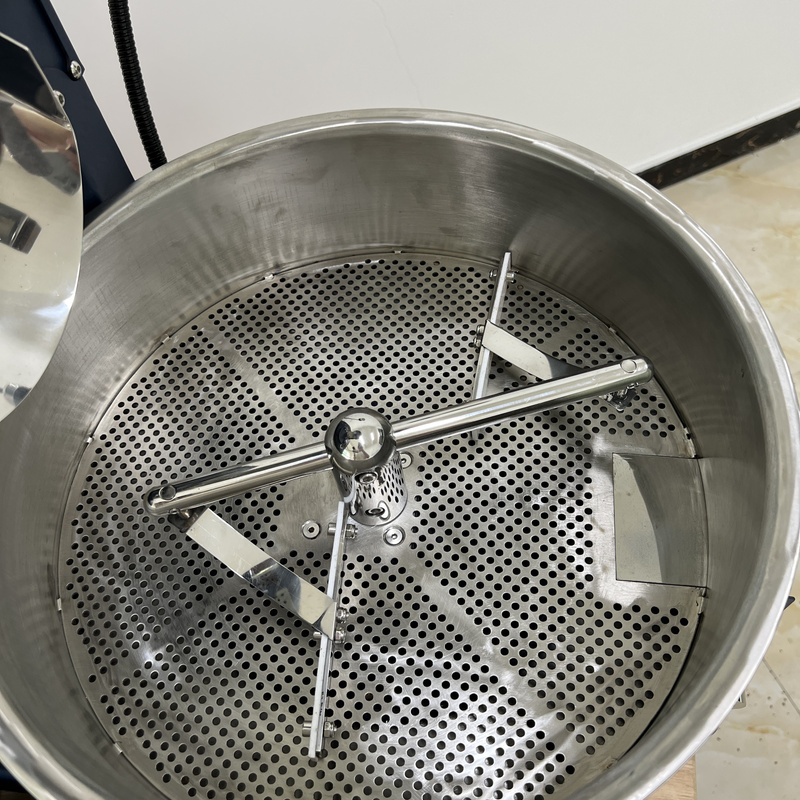
Cooling tray and stirring arm. Roasted beans dropped into the tray sit on a perforated stainless plate; the cooling fan pulls room air down through them while the stirring arm turns the bed so every bean is exposed. The tray, arm and fan are what get beans from drop temperature to hand temperature — in about 1–2 minutes on YS and DY models, and on SD Pro models in about 2 minutes for single-origin coffee and 2.5 minutes for blends, with a discharge that empties the drum in about 13 seconds.
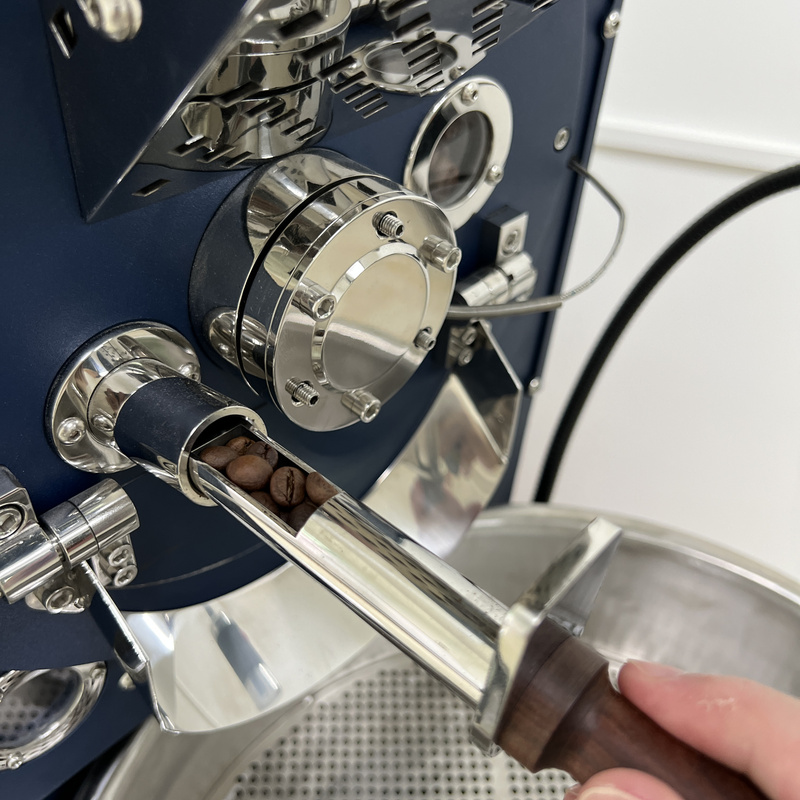
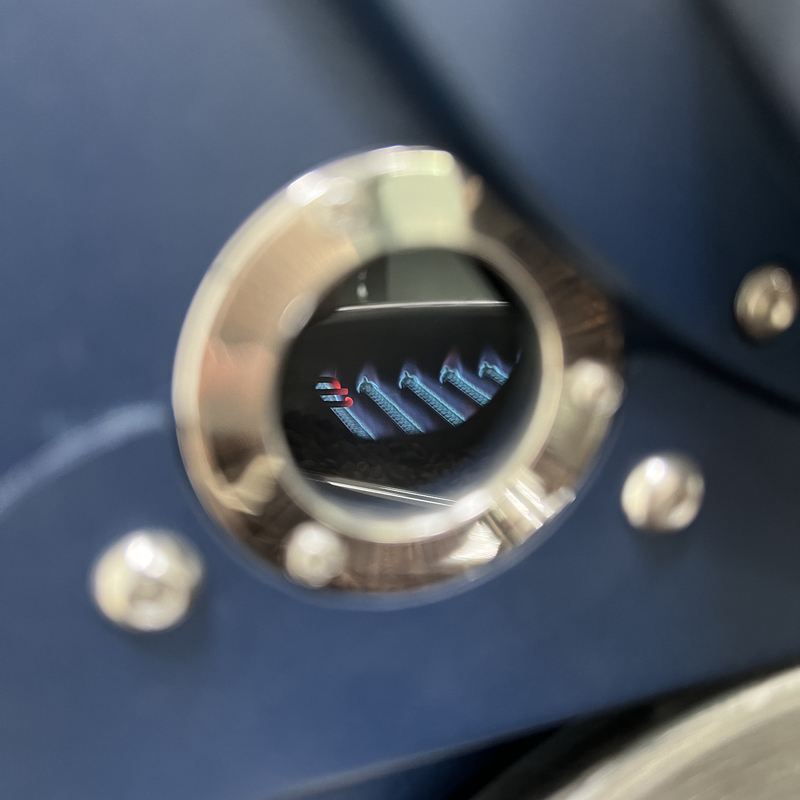
Trier, sight glass and drum door. The trier is the sampling spoon you pull during the roast; the sight glass is the window on the drum face; the door is what opens at the drop. All three are fitted and adjusted at this stage so they seal, move freely and sit square in the front plate.
Hopper and chute. The green-bean hopper and the charge chute are fitted and the charge path is checked so a full batch enters the drum cleanly.
Trim, badges, nameplate. Last on.
Why cooling speed matters to the cup
Roasting does not stop when the burner does. Beans dropped at 200 °C or more carry enough heat to keep developing for as long as they stay hot. Two extra minutes in a slow tray can push a light roast into a medium one and flatten the acidity you were roasting for. Fast, even cooling fixes the roast where you dropped it. That is why the tray, the arm, the fan and the discharge speed are engineered as a set — and why “cooling time” is a number on our spec sheets, not a footnote. Our cooling and quenching article covers the roasting side of this.
How we do it
Cyclone, tray, arm, fan, trier, sight glass, doors, hopper and trim are fitted in our plant on the assembly line, by the same team that then hands the machine to QC. Each moving part is checked for free movement and seal; the cooling fan and stirrer are run; the drop is tested with the door. The photographs on this page — beans discharging into the tray, the perforated tray with its arm, the trier full of beans, the sight glass, the cyclone — were taken on assembled machines in our plant.
What this means for you
- The roast you drop is the roast you get: cooled fast, evenly, without stewing.
- Chaff goes into a bin, not up your chimney.
- The parts you touch every batch — trier, door, sight glass — work smoothly, because they were fitted and adjusted by hand before the machine ever roasted.
How to verify this on any roaster
Ask for the cooling time for a full batch, in minutes, and the discharge time. Then ask to see, in the inspection video, a full batch dropped and cooled with a hand placed on the beans at the end. A machine that needs four or five minutes to cool a full batch is a machine that will over-develop every light roast you attempt.
Frequently asked questions
Can the cooling tray run while the next batch is roasting?
On the YS series and other models with independent drives, yes. See the drive system page.
How often does the cyclone need emptying?
Depends on batch size and how much chaff the coffee sheds; typically after each session or every few batches. The collector is separate from the body so emptying takes seconds and does not require stopping the machine.
Is the cooling tray stainless?
Yes — 304 stainless, perforated, deburred so it can be brushed clean. See materials.
Does the SD Pro's faster cooling need a bigger fan?
The SD Pro’s cooling is a system — tray size, air volume and stirring designed together — rather than one larger part. That is why its cooling and discharge times are quoted separately on the spec sheet.
Final thoughts
Final assembly is where the machine becomes a roaster rather than a body with a drum in it. From here it goes to testing — first the gas leak test, then electrical, heat-up and the test roast. Models are on the SD series page, or return to the full build sequence.
Tell us your country, voltage, gas type and kilograms per week — we will send the matching spec sheet with cooling and discharge times for that model. Request the spec sheet · WhatsApp: +86 184 0771 4607
Last updated: September 15, 2026