
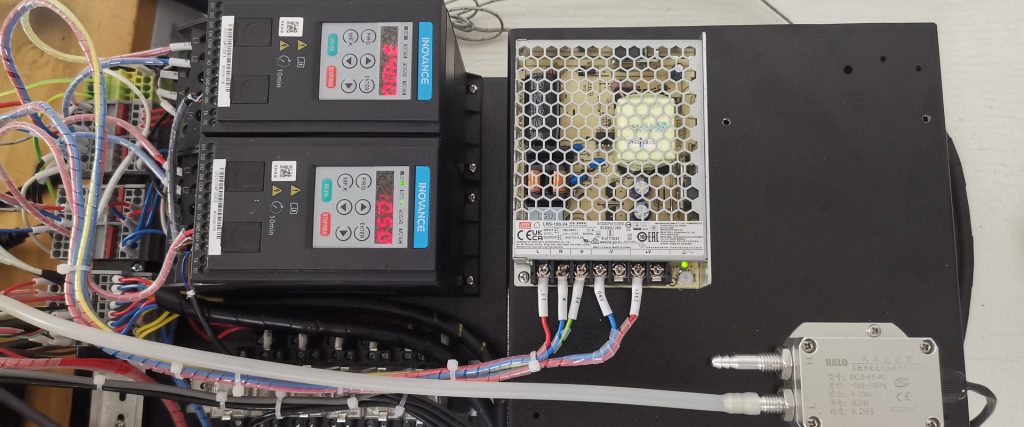
“Will it work on my electricity?” is the second most common technical question we receive, and the honest answer has two parts. First, the machine is wired for your supply — that is covered on the control panel page. Second, it is then tested on that supply, as an appliance, before it ships. This page is the second part.
Where this step sits
Electrical testing follows the gas leak test and precedes the heat-up run and the test roast. It is part of the second of the three inspections every machine receives.
What is tested
Earth continuity. Every exposed metal part of the machine — body, panels, cyclone, cooling tray, control cabinet door — is checked for a low-resistance connection to the earth terminal. If a live wire ever touched the body, this is what makes the breaker trip instead of the operator.
Insulation resistance. The insulation between live conductors and earth is measured at test voltage to confirm there is no path for leakage current through damaged insulation, moisture or a pinched cable. This is the test that finds a wire nicked during assembly.
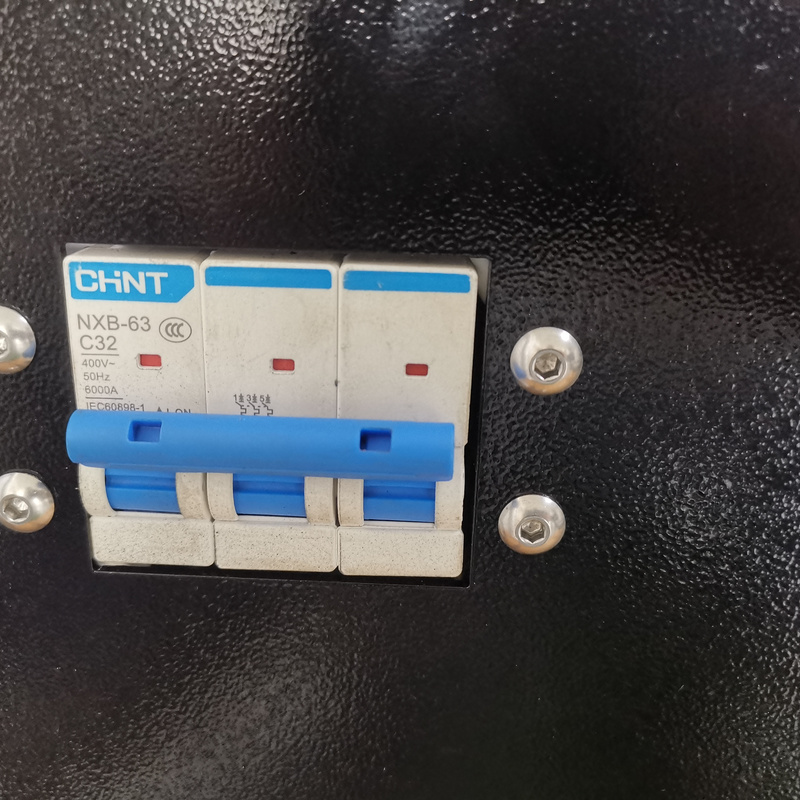
Protection devices. Each circuit breaker in the panel is confirmed to be the correct rating for its circuit and to trip. On machines with residual-current protection, the device is tested.
Motor rotation and current. Every motor — drum, exhaust fan, cooling fan, stirrer — is run and checked for correct direction of rotation and normal running current. A fan running backwards moves little air and is a surprisingly common fault on machines assembled in a hurry.
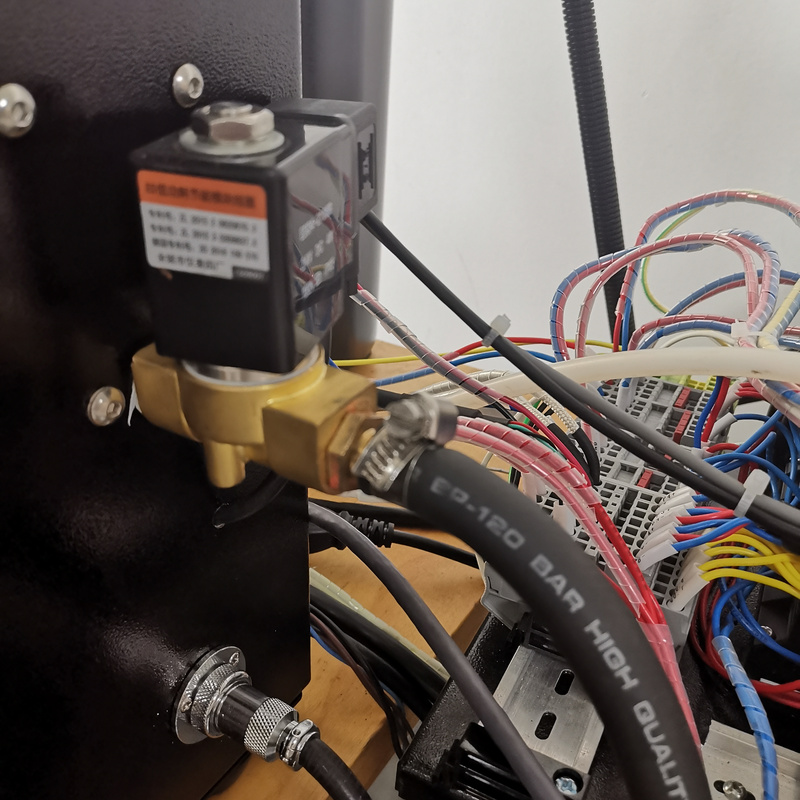
Controls. Emergency stop cuts power to the drives and closes the gas solenoid. Every switch, indicator and the touch screen or push-button panel is exercised. On Siemens-controlled machines, the PLC program is confirmed to be the release for that model and the screen calibrated.
Thermocouples. Bean and air probes are checked to read ambient correctly and to respond; a probe that reads but reads slowly is replaced here.
The machine is tested on the voltage, phase and frequency it was wired for — 220–240 V single phase for 1–15 kg machines, 220 V or 380 V for 20–30 kg, 380 V three phase for 60 kg and larger and for electric-heated YS models; for 110 V countries the transformer specified with the machine. See the voltage guide for what to prepare on your side. Results are recorded on the inspection sheet against the serial number.
What this means for you
- The machine your electrician connects has already been proven safe as an appliance: earthed, insulated, protected.
- Fans turn the right way, probes read, the emergency stop works — the day-one faults that cost an installation day are caught in our factory.
- If your installer, insurer or inspector asks for electrical test values for the machine, there is a record with its serial number.
How to verify this on any roaster
Ask for the electrical test record for your serial number — the earth continuity and insulation results and the supply the test was run on. Then, in the inspection video, ask to see the emergency stop pressed while the machine is running: the drum should stop and the flame should go out. Both requests take a minute; both separate a tested machine from an assembled one.
Frequently asked questions
Does the factory test replace the installation inspection in my country?
No. Many countries require the installation — the supply, the isolator, the connection — to be inspected by a licensed electrician. The factory test proves the machine; the site inspection proves the installation. Our documentation supports the second, and the certifications page lists what ships with the machine.
What if my supply voltage is unstable?
Tell us the range. Motors and controls tolerate normal supply variation; for supplies with large swings, a stabiliser on the machine’s feed is inexpensive insurance and we can advise on sizing.
Can I ask for the machine to be tested at a specific frequency — 50 or 60 Hz?
The machine is built and tested for the frequency of your country. If you are in a 60 Hz country, say so at order; it affects motor speed and is not something to discover on site.
Are electric-heated machines tested differently?
Electric-heated models (YS-6, YS-12 electric, DY electric, EC-500G) additionally have their heating elements tested for insulation and current draw, and are run to temperature on the electrical supply as part of the heat-up test.
Final thoughts
The electrical test is what turns “wired for your voltage” into “proven on your voltage”. It sits between the gas test and the heat-up run in the assembled-machine inspection. Or return to the full build sequence.
Tell us your country, voltage, gas type and kilograms per week — we will send the matching spec sheet with the electrical requirements for that model. Request the spec sheet · WhatsApp: +86 184 0771 4607
Last updated: September 15, 2026