
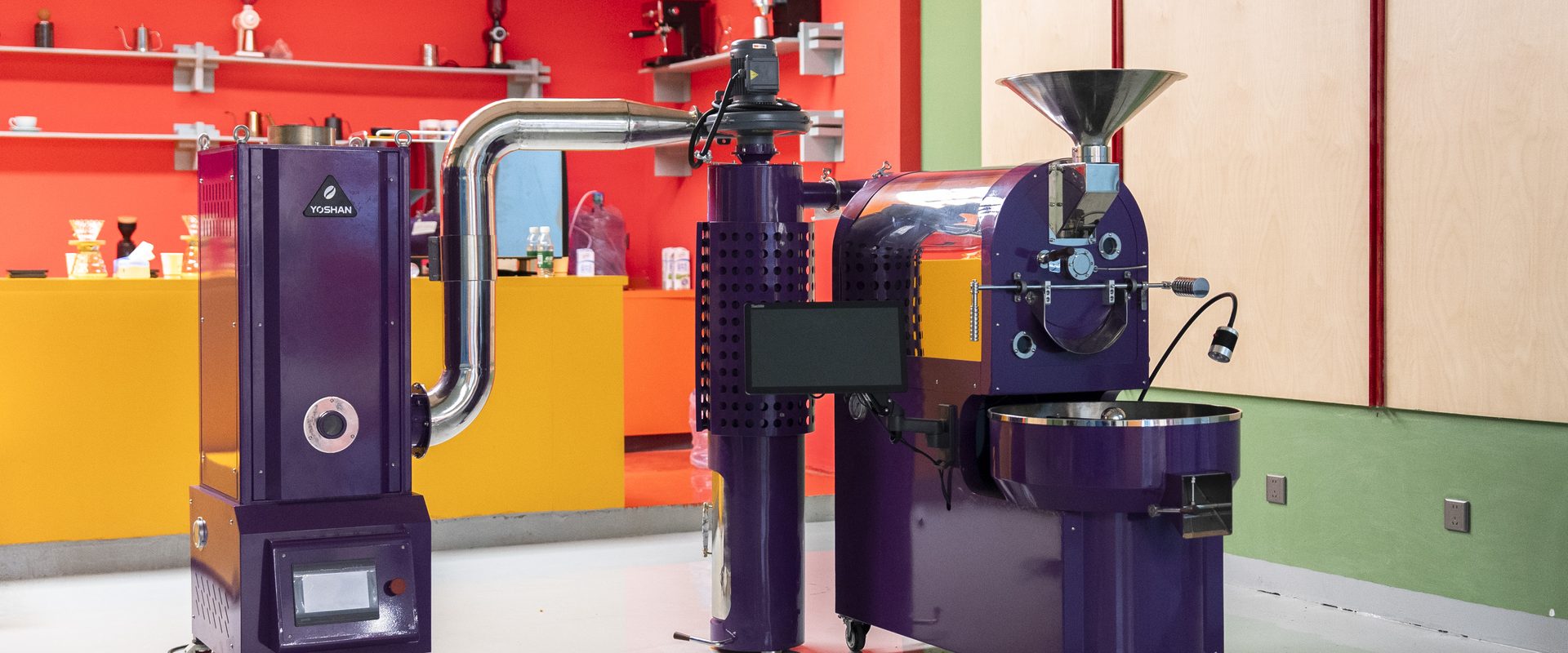
Which 3kg Roaster Is Yours?
Start from the roasted coffee you sell each week, not from the biggest machine you can afford. Up to about 100 kg a week — a café roasting in-house, a micro roastery or a small wholesale round, roasted by one person a few sessions at a time — fits the manual SD-3KG. When one operator has to roast, serve and pack at once, or when you want the same curve repeated in every shop, the SD-3KG Pro runs the roast for you. Past about 100 kg a week, look at the 6kg roaster. See all 27 commercial coffee roaster models and prices.
SD-3KG: One Manual Roaster, Three Heat Options
-
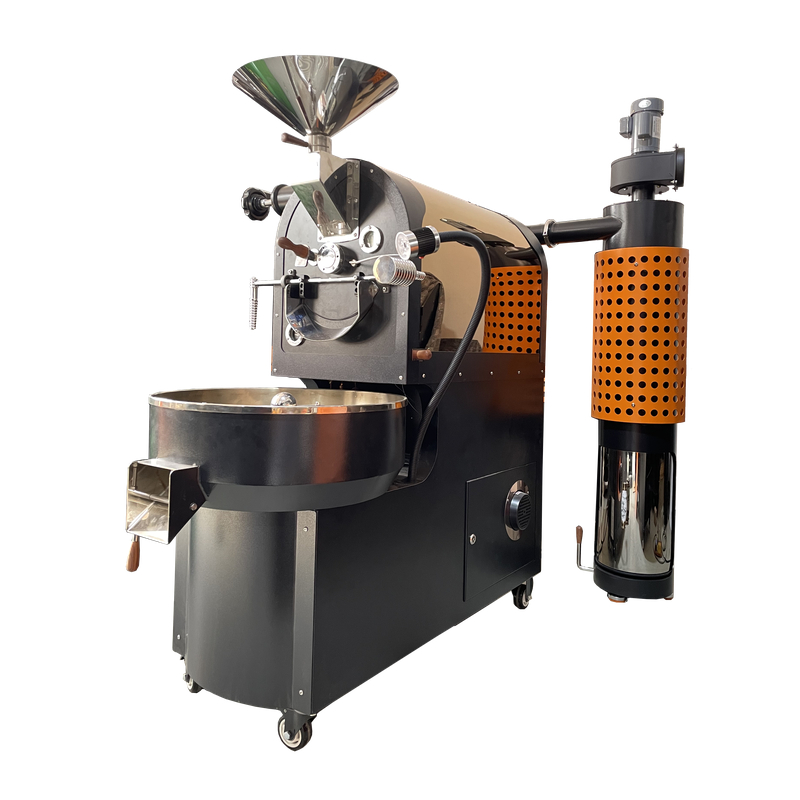 3 kg · Manual · USD 4,599
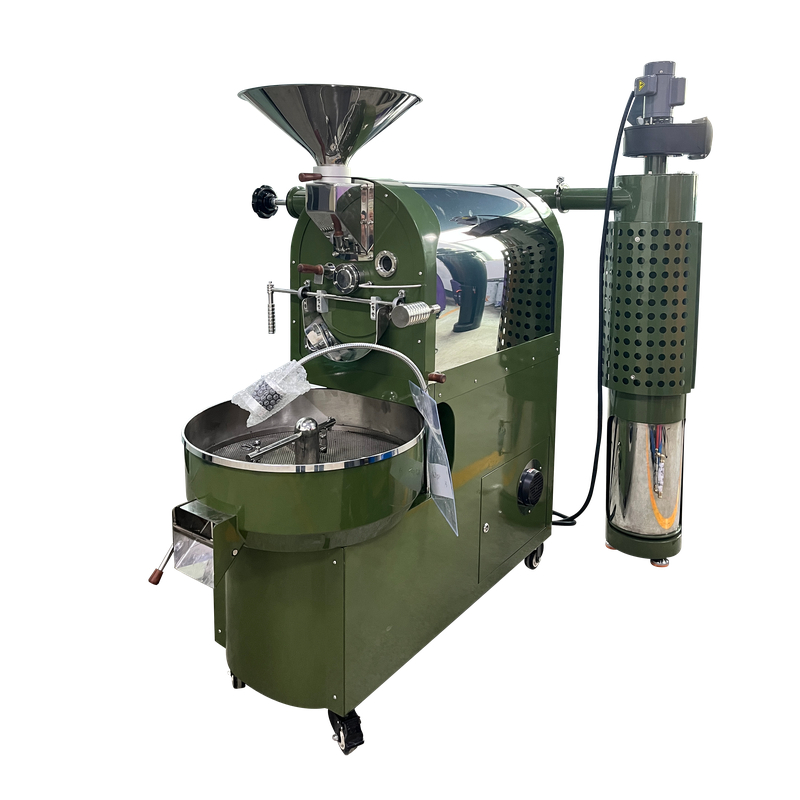
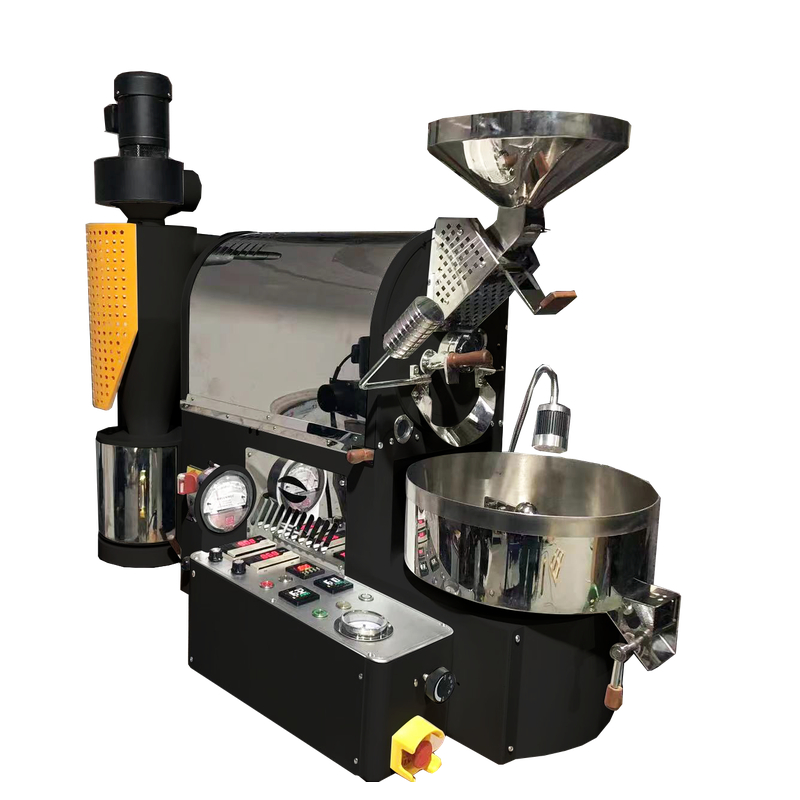
The 3kg coffee roaster most customers start with: cast-iron drum, LPG or natural gas burner, push-button panel, 220 V single-phase; 8–12 kg/h.
-
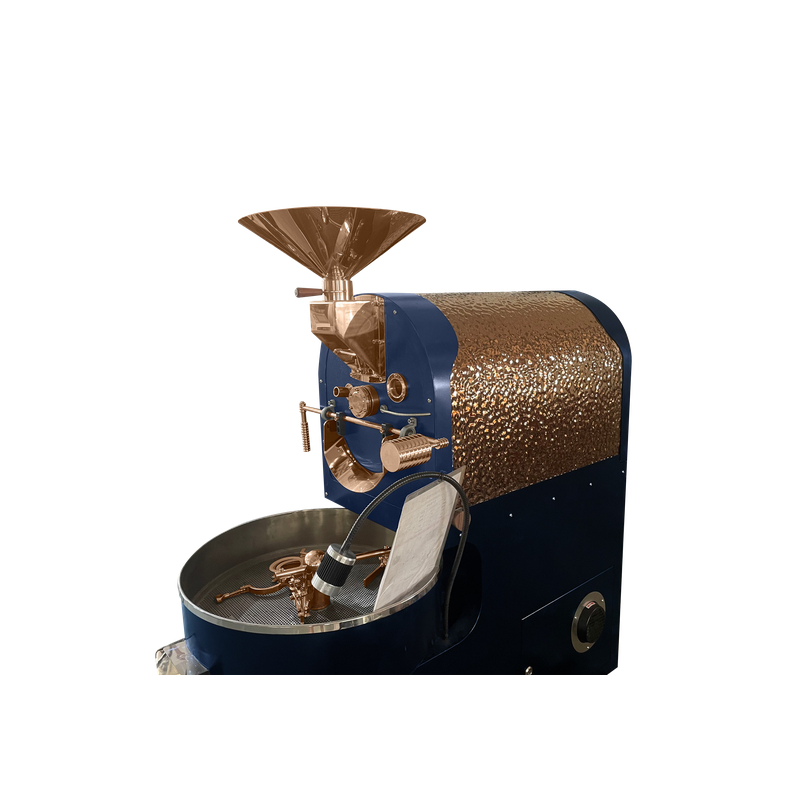 3 kg · Manual · USD 4,899
Same drum and controls with electric elements instead of the burner; 220 V single-phase or 380 V three-phase by country.
-
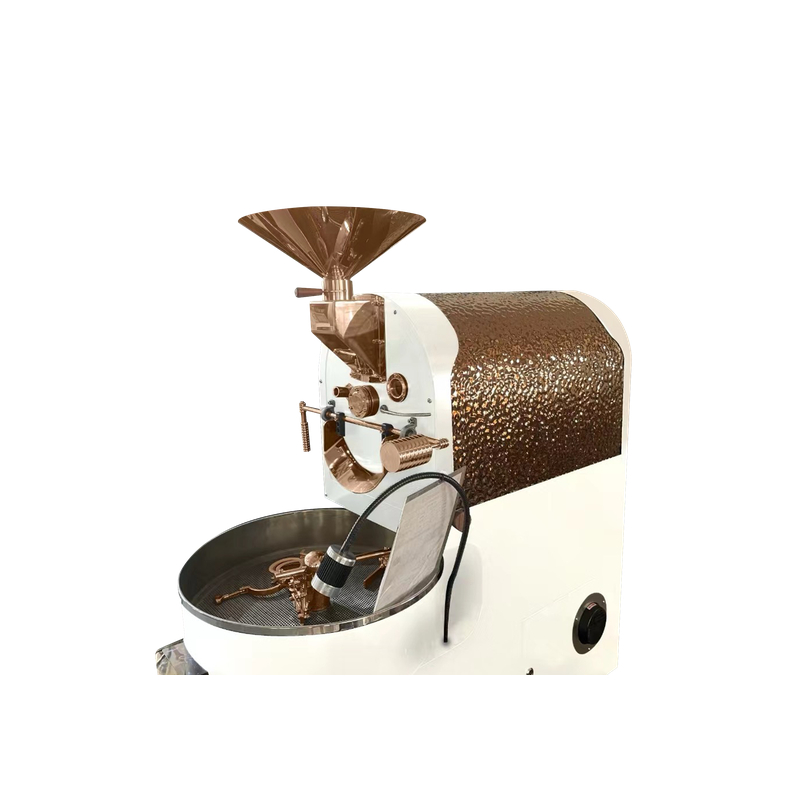 3 kg · Manual · USD 6,199
Air is heated before the drum, for even light roasts and no flame in the room; 380 V three-phase.
SD-3KG Pro: Fully Automatic
-
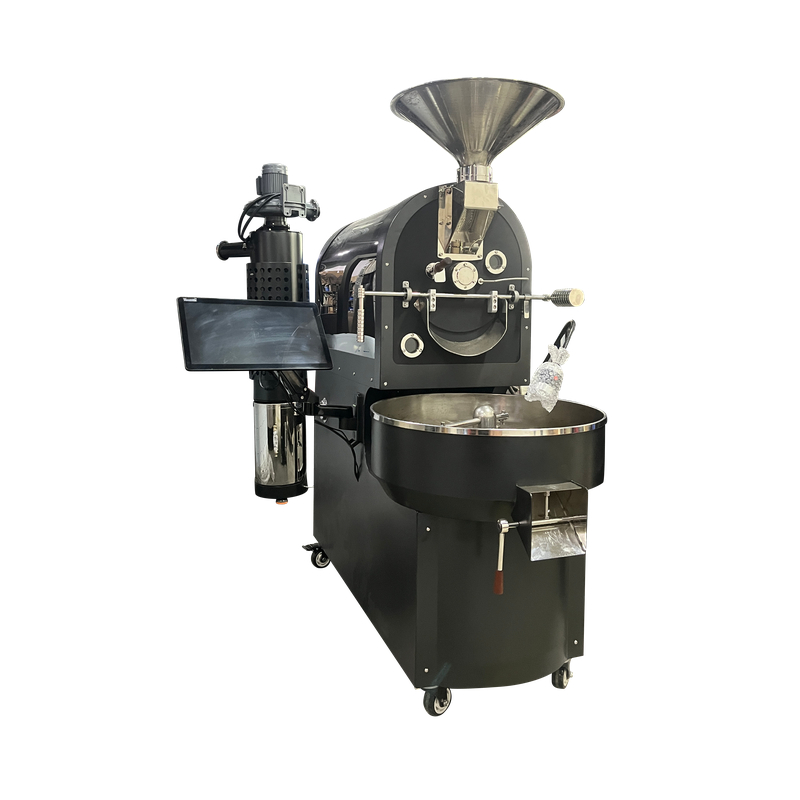 3 kg · Fully automatic · USD 8,889
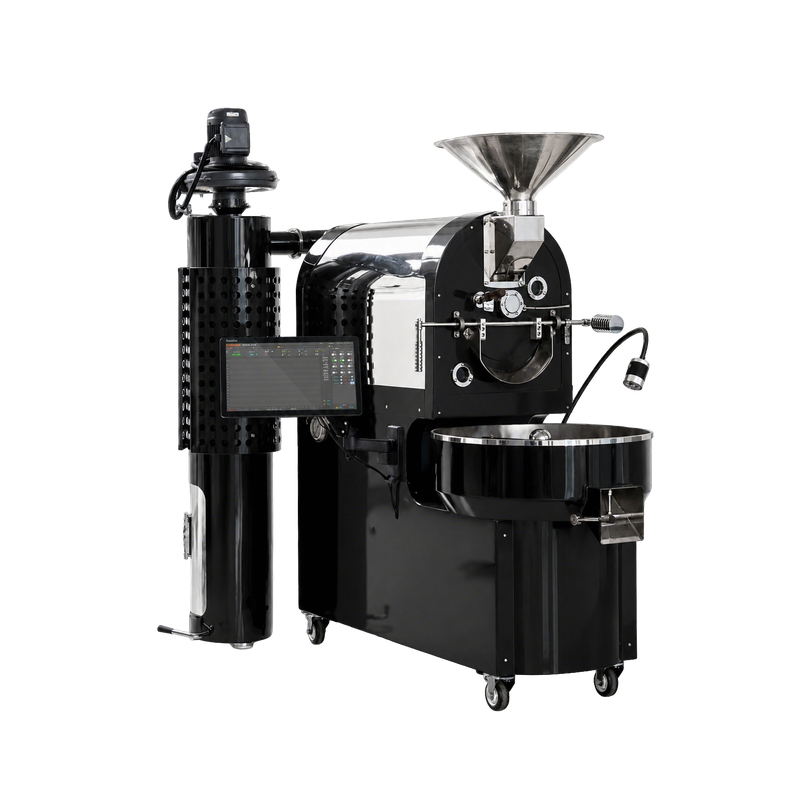
PLC touchscreen, saved roast curves and one-touch repeat on a double-layer cast-iron drum; 220 V single-phase, 1 kW; natural gas or LPG.
-
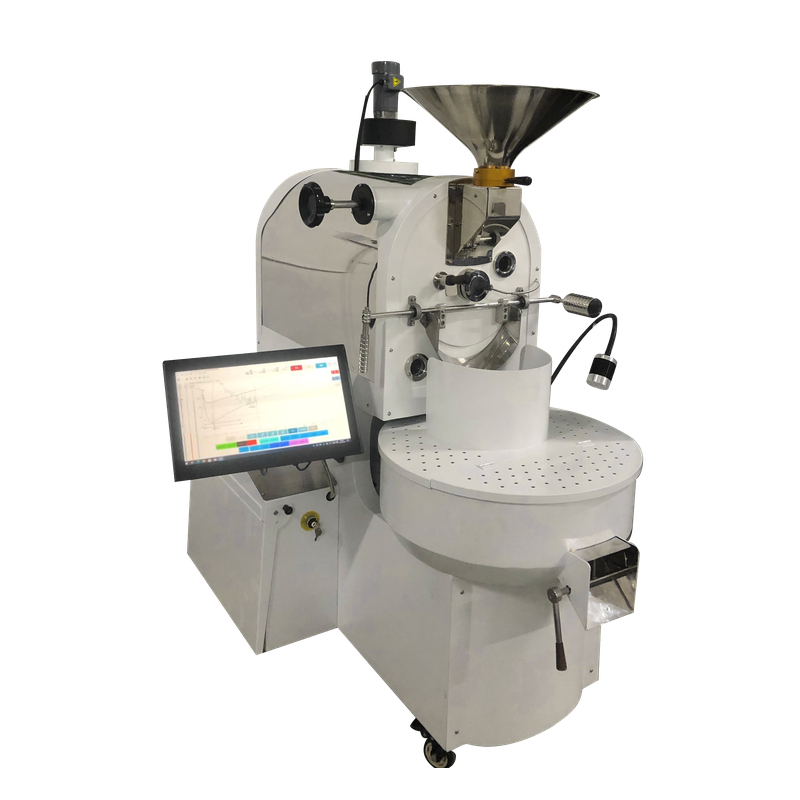 3 kg · Fully automatic · USD 11,209
The same PLC control with 16 kW full hot-air electric heating on 380 V three-phase; for all-electric roasteries and light-roast programmes.
Add-Ons for a 3kg Roastery
Ordered with the roaster, these ship in the same consignment at 20% off list price; all three are made in our own plant.
-
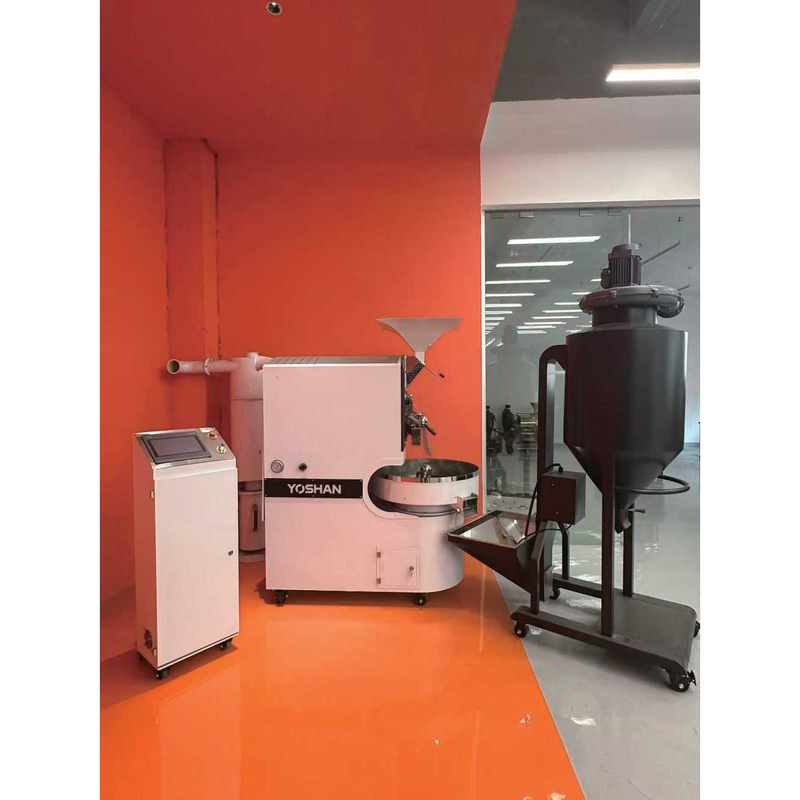 USD 1,299
Food-grade 304 stainless, 400 W, 3 kg of green coffee in 2 minutes, 99% stone detection.
-
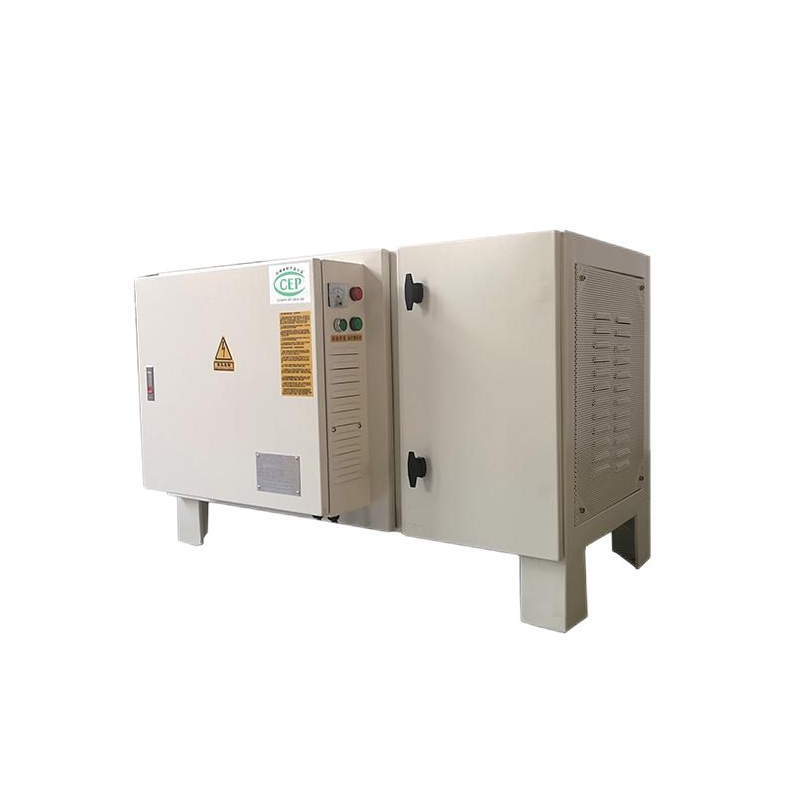 USD 1,500
300 W, 3,000 m³/h, sized for 1–3kg roasters; display stand and filter in one unit, black or white.
-
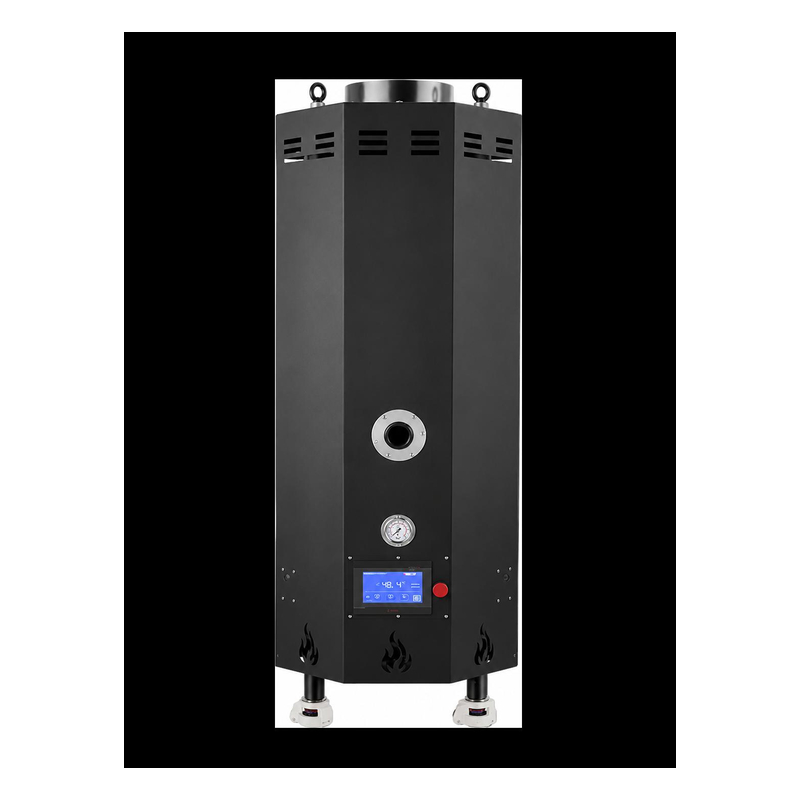 USD 4,300
Gas afterburner for 1–3kg roasters, LPG or natural gas, 15,000–24,000 kcal/h; six standard colours or custom.
3kg Coffee Roasters: SD-3KG Manual and SD-3KG Pro Fully Automatic
- Two models: manual SD-3KG, or PLC fully automatic SD-3KG Pro
- USD 4,599–6,199 manual, 8,889–11,209 Pro; EXW Shenzhen
- 2–3 kg (4.4–6.6 lb) a batch; 8–12 kg/h manual, 9–12 kg/h Pro
- Gas on 220 V single-phase; heater-tube or full hot-air electric options
- Cast-iron drum; double-layer cast iron on the Pro
- Minimum order one unit; 50% deposit, balance after your test-roast video
- One-year warranty, parts by air express; extend to two years
- Roasting in the Philippines, the United States and Colombia
- Compare SD-3KG and SD-3KG Pro
- Gas, Heater-Tube or Full Hot-Air
- Delivery, Crate and Payment
- Installation, Add-Ons and Warranty
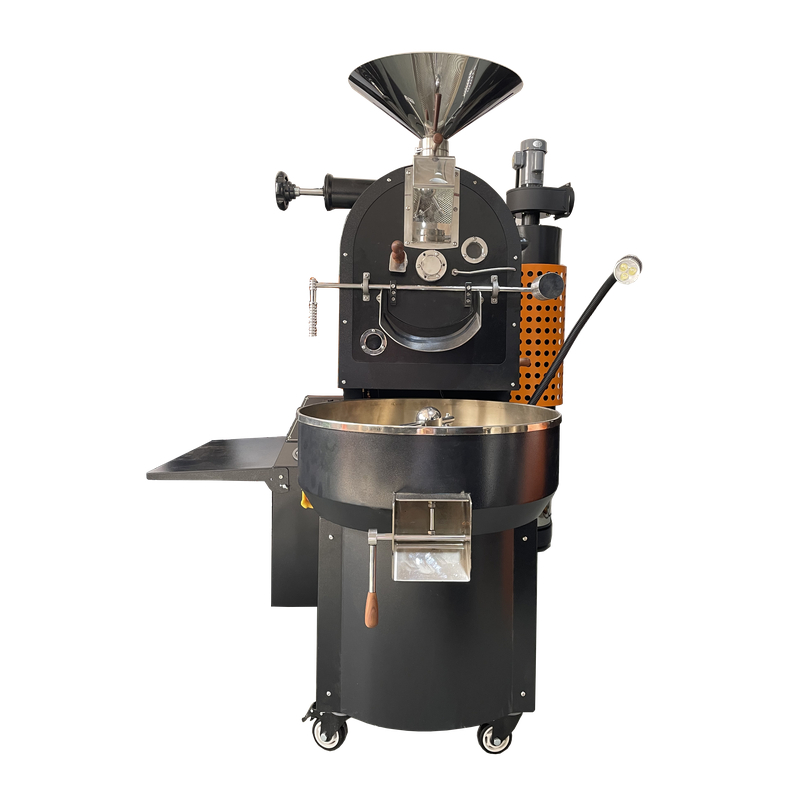
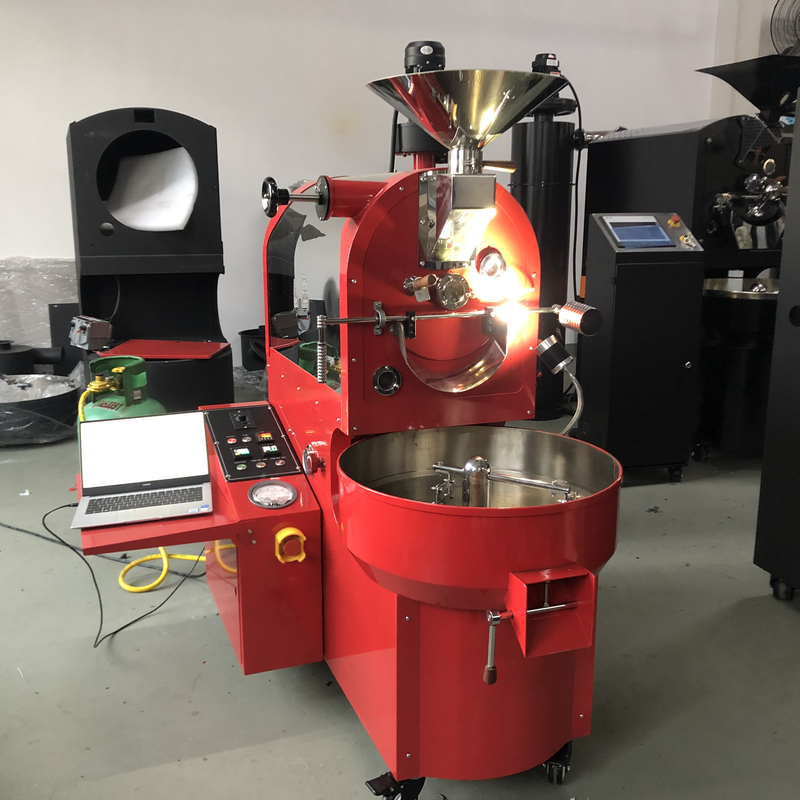
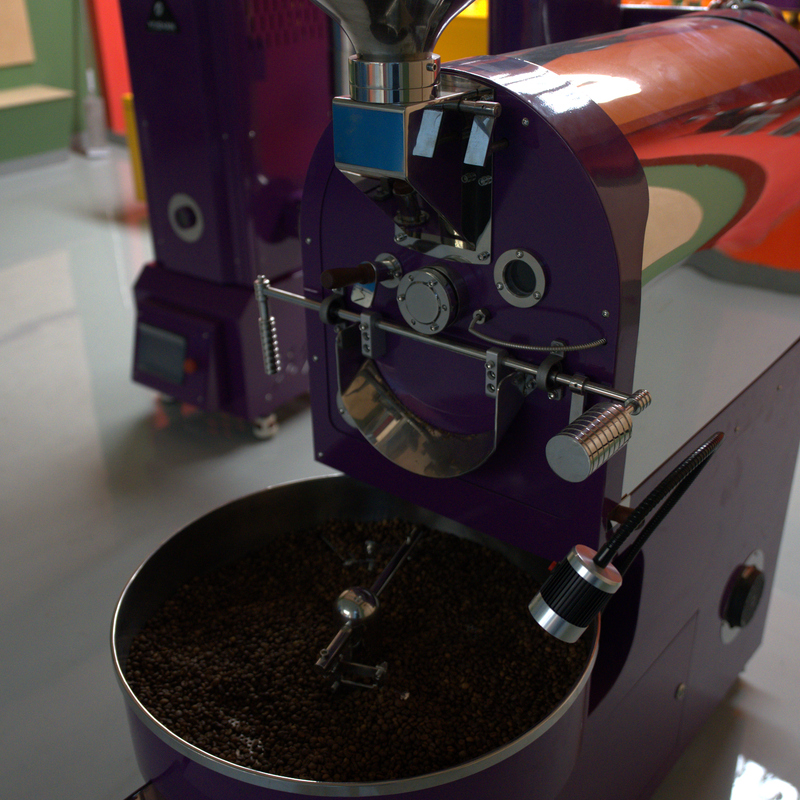
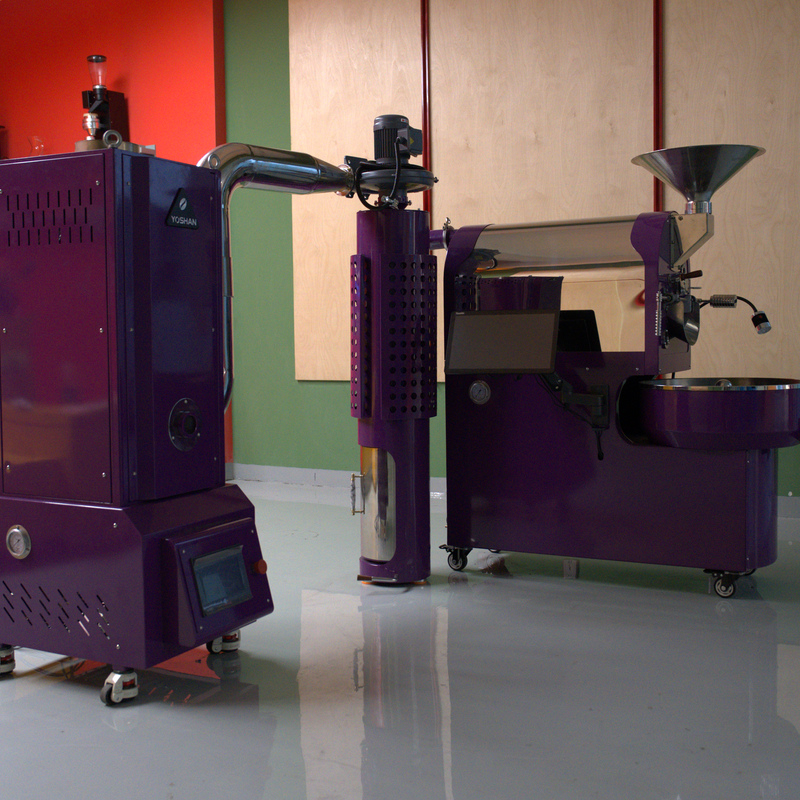
The 3kg coffee roaster is where most of our café and micro-roastery customers move from stainless to cast iron: the SD-3KG holds heat between batches, roasts 2–3 kg of green coffee at a time and puts out 8–12 kg of roasted coffee an hour on a push-button panel. The SD-3KG Pro is the same cast-iron machine — double-layer drum — under a PLC touchscreen that stores and repeats your curves; only the Pro is fully automatic. Five configurations, two heat sources, one price list in USD, EXW Shenzhen: the same figures you will see on your quotation from a 3kg coffee roaster manufacturer that has built drum roasters since 1990.
| SD-3KG (manual) | SD-3KG Pro (fully automatic) | |
|---|---|---|
| Price, gas | USD 4,599 | USD 8,889 |
| Price, electric | USD 4,899 heater-tube · USD 6,199 full hot-air | USD 11,209 full hot-air |
| Batch size | 2–3 kg (4.4–6.6 lb) | 2–3 kg (4.4–6.6 lb) |
| Output per hour | 8–12 kg (18–26 lb) | 9–12 kg (20–26 lb) |
| Roast time | 10–15 min after 180 °C preheat | 6–12 min |
| Cooling | 1–2 min | 1–2 min |
| Drum | Cast iron | Cast iron, double layer |
| Heating, gas | Semi hot-air, semi direct fire | Semi hot-air, semi direct fire |
| Heating, electric | Heater-tube or full hot-air | Full hot-air, 16 kW |
| Control | Push-button manual panel | PLC touchscreen, auto or manual |
| Power, gas model | 220 V 50 Hz single-phase | 220 V 50/60 Hz single-phase, 1 kW |
| Power, electric model | 220 V single-phase or 380 V three-phase — depends on your country, confirm with our sales | 380 V 50/60 Hz three-phase |
| Gas consumption | On request | Natural gas 6 kPa, 1.5–1.9 m³/h · LPG 5 kPa, 0.45–0.6 m³/h |
| Machine weight | 230 kg | On request |
| Certification | CE, RoHS, FDA coating report | CE, RoHS, FDA coating report |
| Lead time | Gas: confirmed at quotation · Heater-tube electric: 40–60 days | Confirmed at quotation |
Gas. Most 3kg coffee roasters we ship are gas. The SD-3KG gas model (USD 4,599) runs on LPG (propane) or natural gas and only needs a 220 V single-phase socket for the drum motor and fans; if your shop has a gas line or you can place a cylinder outside, this is the cheapest 3kg coffee roaster to buy and to run — the 3 kg propane coffee roaster for sale most of our café customers choose. The Pro burner takes natural gas at 6 kPa (1.5–1.9 m³/h) or LPG at 5 kPa (0.45–0.6 m³/h).
Electric. Go electric when gas is not allowed indoors, when your building has no line, or when a fully electric roaster is a landlord or insurance condition. The heater-tube SD-3KG (USD 4,899) keeps the same drum and controls and swaps the burner for electric elements; its supply is 220 V single-phase or 380 V three-phase depending on your country, so tell us where the machine is going and we confirm the wiring before you order. The full hot-air electric versions (USD 6,199 on the SD-3KG, USD 11,209 on the Pro) heat the air before it enters the drum and run on 380 V three-phase — 16 kW on the Pro.
110 V countries. The United States, Canada, Japan and Mexico usually run the gas model on a 220 V commercial circuit or a step-up transformer; we tell you the amperage and the plug when you send your address.
What is in the price. Every price on this page is EXW Shenzhen: the roaster, its chaff cyclone, the maintenance tool kit and the manual, wrapped in film inside a fumigated wooden crate at our factory door. Sea freight to your port, air freight, insurance and DDP door delivery are quoted separately on the same quotation, so you see the landed cost before you pay anything. Crate dimensions and gross weight are on the packing list.
Payment and lead time. 50% deposit to start production and 50% before shipment, by T/T, L/C, PayPal or card; Alibaba Trade Assurance if you prefer it. Before the balance is due you receive the test-roast video of your own machine. The heater-tube electric SD-3KG ships in 40–60 days; gas and Pro lead times are confirmed in writing on your quotation.
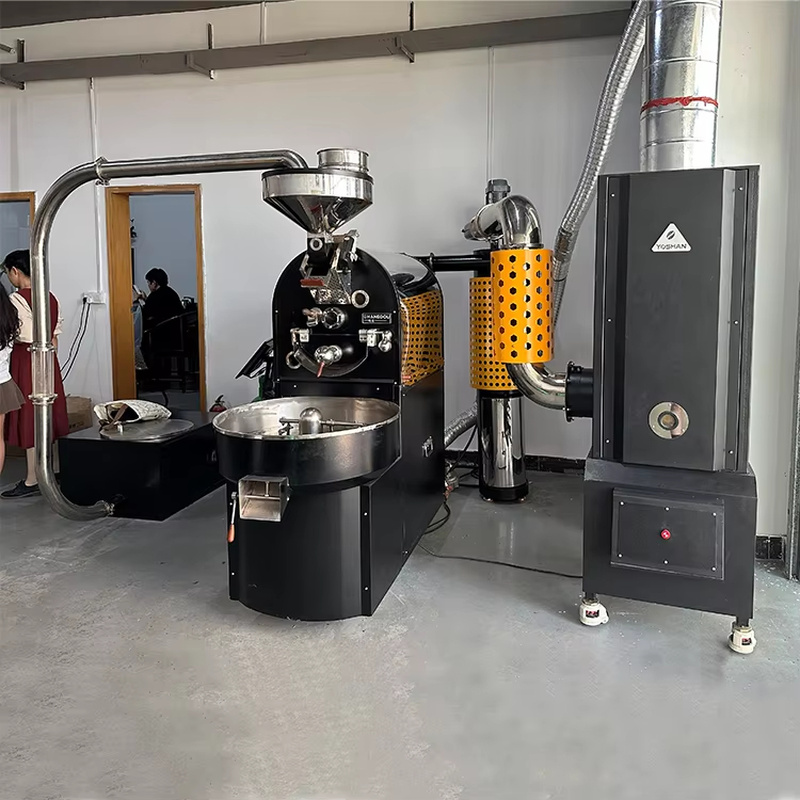
Installation. A 3kg coffee roaster is a floor-standing machine (230 kg on the SD-3KG) that needs an exhaust ducted outdoors, a 220 V single-phase supply for the gas model, and a regulator set to 5 kPa for LPG or 6 kPa for natural gas on the Pro. The drawing pack that ships with your order gives the footprint, exhaust diameter and clearances so your electrician and installer are not guessing.
Add-ons. For a shop that roasts in front of customers we pair the roaster with the YS-JD-3k electrostatic smoke filter (sized for 1–3kg roasters), the YS-HB3 afterburner where local rules require smokeless exhaust, and the YS-Q3 destoner that clears 3 kg of green coffee in two minutes. All three are made in our own plant, priced in the cards below and 20% off list when ordered with the roaster.
Warranty. One-year limited warranty from the day you receive the goods: any part that fails without human damage is replaced by air express at our cost, with 24/7 lifetime phone and online support; extend the SD series to two years for USD 699. Commissioning is done with you on a video call; spare and wearing parts are stocked at the factory and sent by courier.
What Is Built Into Every 3kg Coffee Roaster




Who Runs a 3kg Coffee Roaster
Four ways our customers use the SD-3KG and SD-3KG Pro — and which one fits.
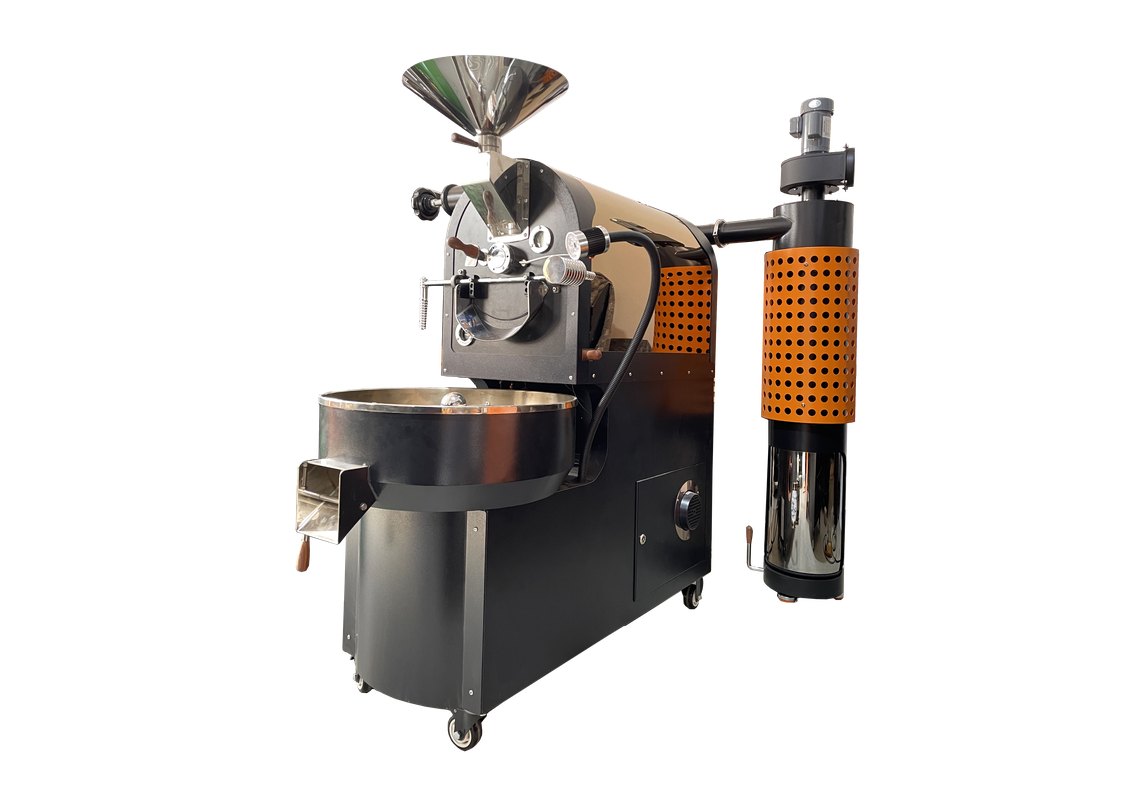
A gas SD-3KG puts out 8–12 kg of roasted coffee an hour from a 220 V socket and a gas line, so two or three three-hour sessions a week cover a busy café and its retail shelf. Push-button control, a cast-iron drum that holds heat between batches, and the lowest price on this page at USD 4,599 EXW.
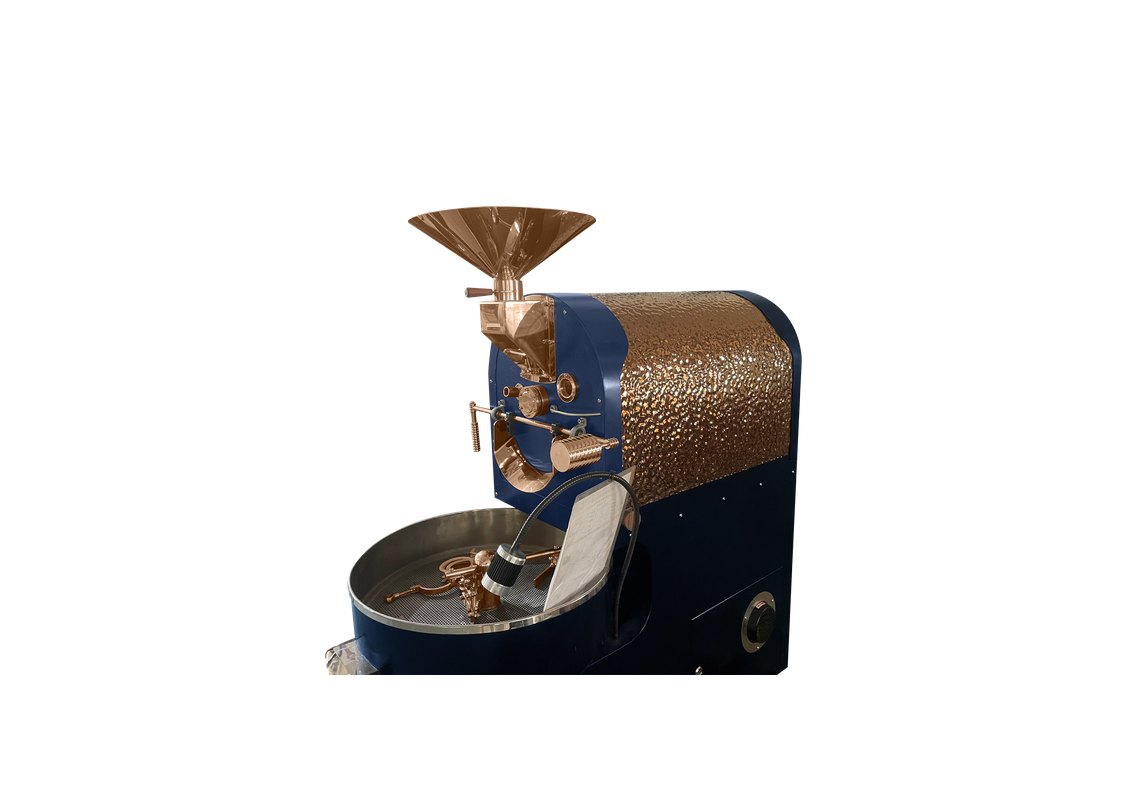
Up to about 100 kg a week from one operator: 2–3 kg batches, 10–15 minutes after a 180 °C preheat, 1–2 minutes cooling. Choose the heater-tube electric SD-3KG (USD 4,899) where gas is not allowed; add the YS-Q3 destoner so stones never reach the drum and the JD-3K filter if you roast indoors.
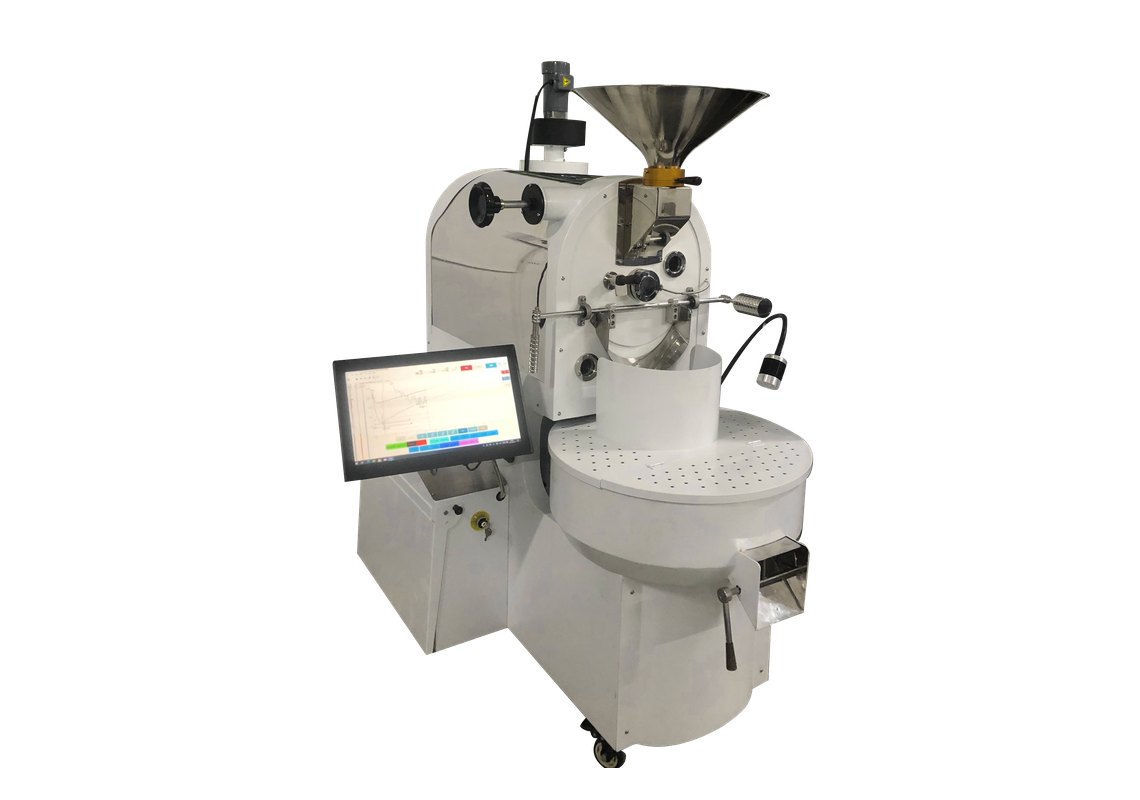
When every shop has to taste the same, the SD-3KG Pro stores the curve on its PLC touchscreen and repeats it batch after batch — one operator can roast, serve and pack at once. 9–12 kg an hour on a double-layer cast-iron drum, gas at USD 8,889 or 16 kW full hot-air electric at USD 11,209.
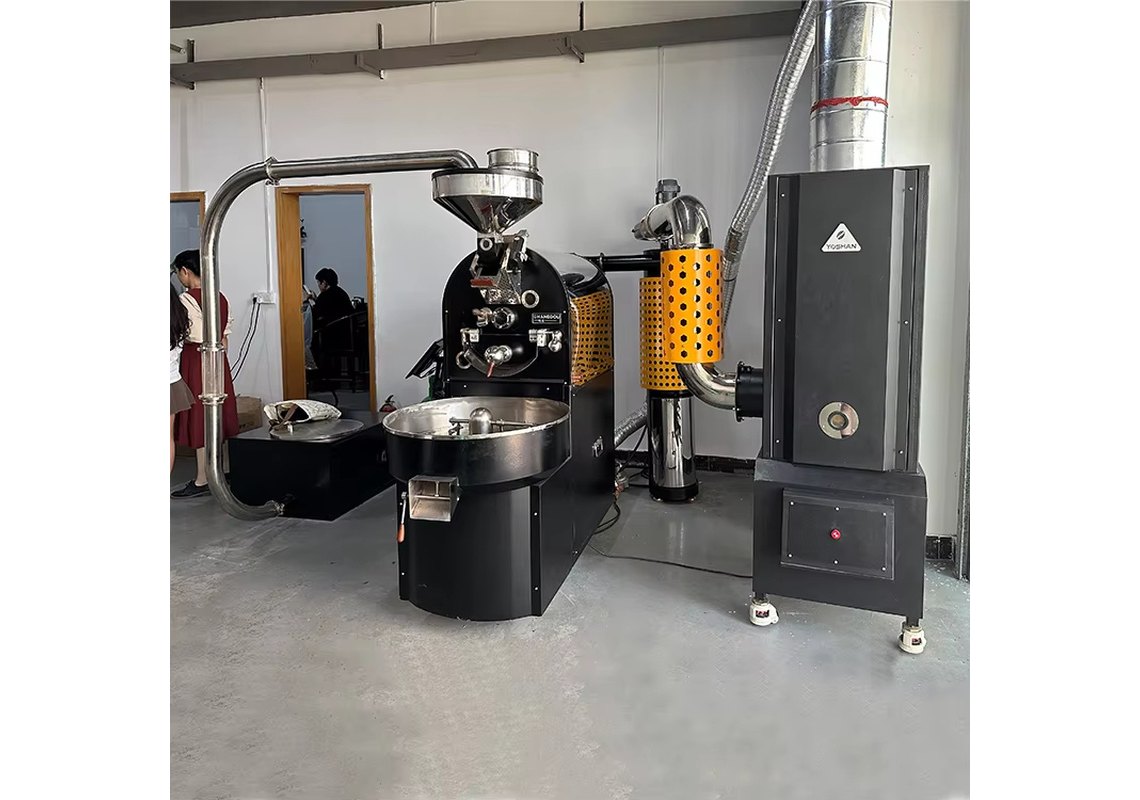
Past six full batches a day, or about 100 kg a week, the SD-6 Pro is the next step — the same SD design, so profiles and habits carry over; the difference is batch size and the burner. Many customers keep the 3kg coffee roaster for samples and small lots when they move up, from the same factory and the same support contact.
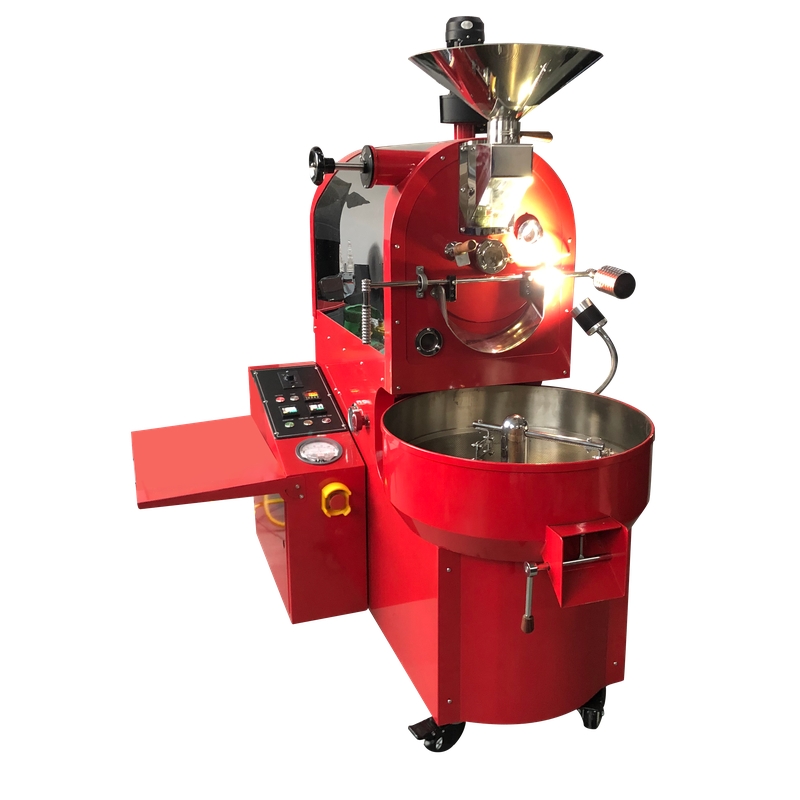
Inspected Three Times, Test-Roasted Before You Pay the Balance
Every SD-3KG 3kg coffee roaster leaves the line only after the drum, the burner train and the electrics have each been checked, then the finished machine is run with real coffee. You receive the test-roast video of your own roaster before the second 50% is due — so what you pay for is a machine you have already watched roasting.
Push-Button or PLC: Two Ways to Roast 3 kg
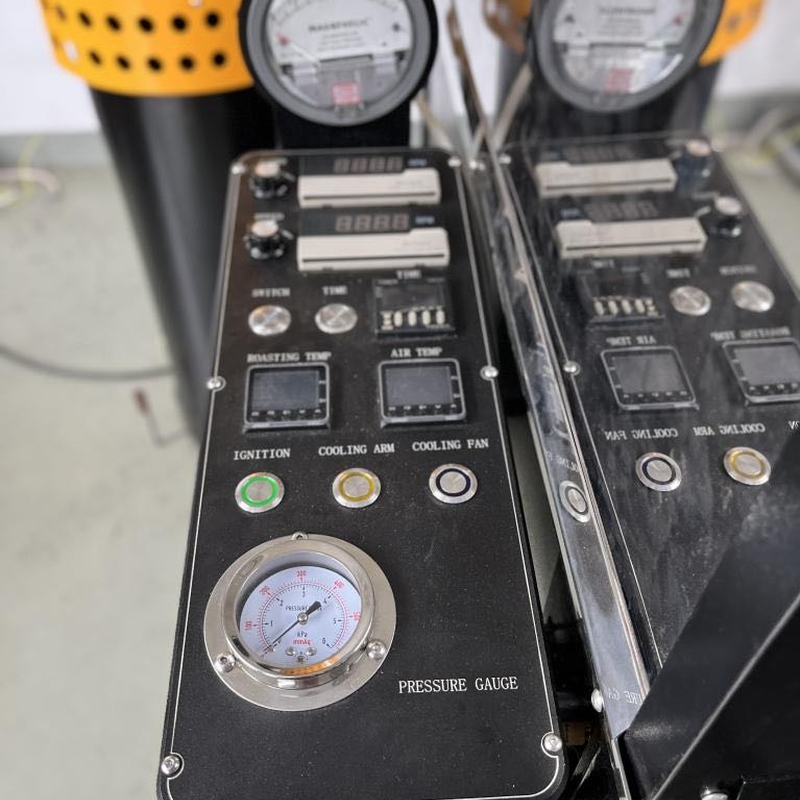
The SD-3KG gives you gas pressure, airflow, drum and temperature control on a push-button panel — the way most roasters learn the craft. The SD-3KG Pro puts the same 3kg coffee roaster under a PLC touchscreen: save a curve, load it, and the machine follows it batch after batch. Switch to manual whenever you want to develop something new. Only the Pro is fully automatic.
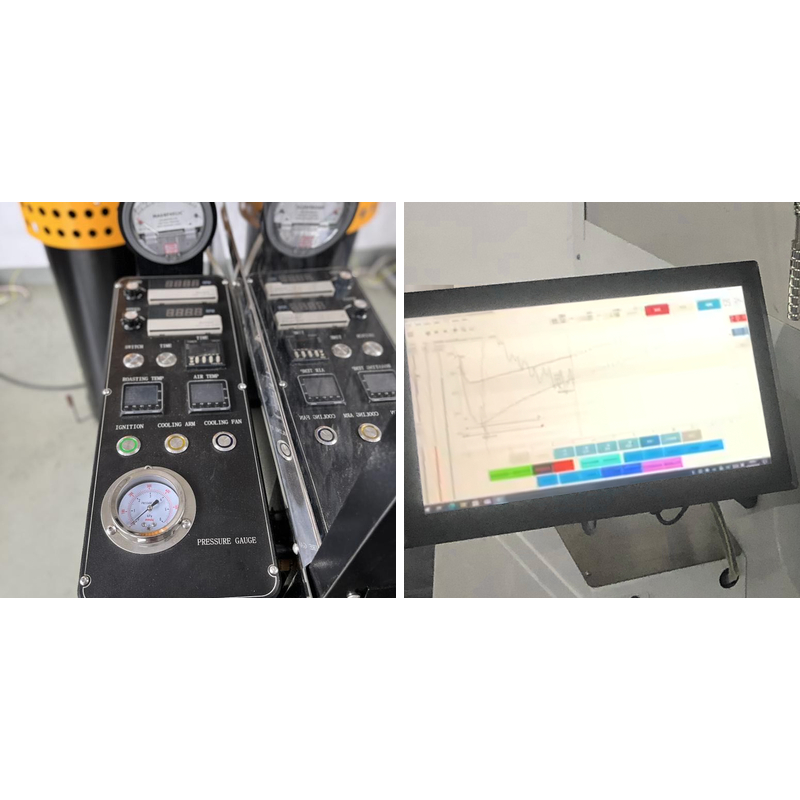
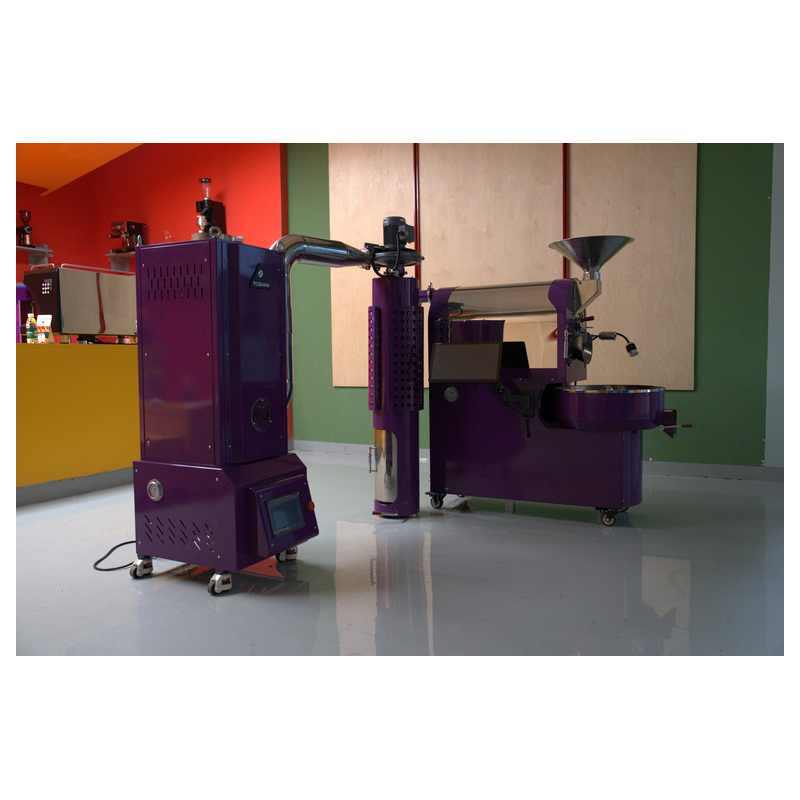
Gas Burner or Hot-Air Electric Heating
Gas models use a half hot-air, half direct-fire system: the burner heats both the drum and the air drawn through it, the classic profile for medium and dark roasts. Hot-air electric models heat the air before the drum, with no flame inside the room. The Pro burner draws 1.5–1.9 m³/h of natural gas or 0.45–0.6 m³/h of LPG; the gas 3kg coffee roaster needs only a 220 V socket for its motors.
Your Colour, Your Logo, or No Logo at All
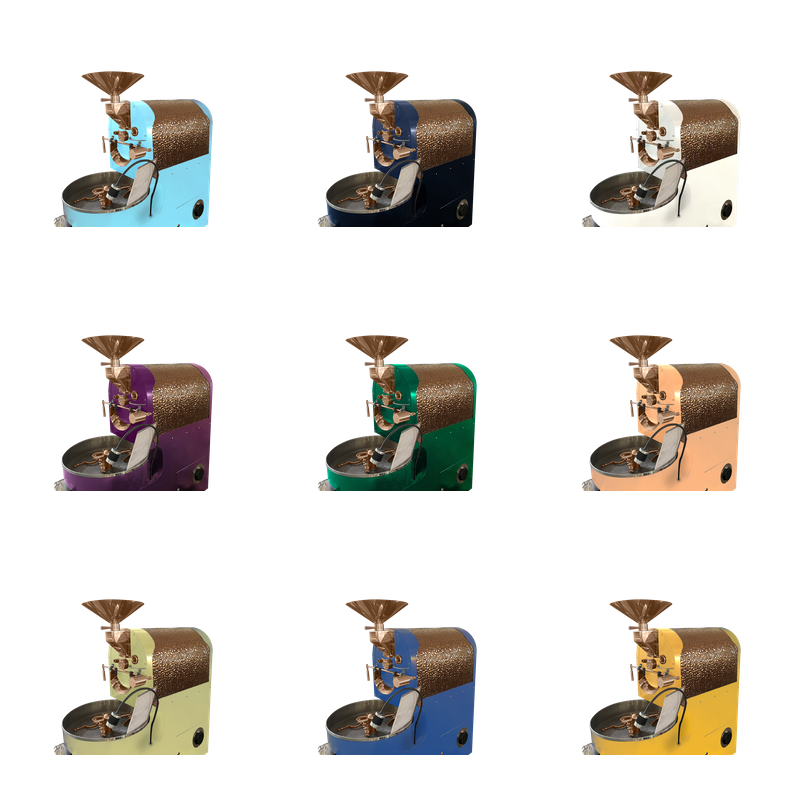
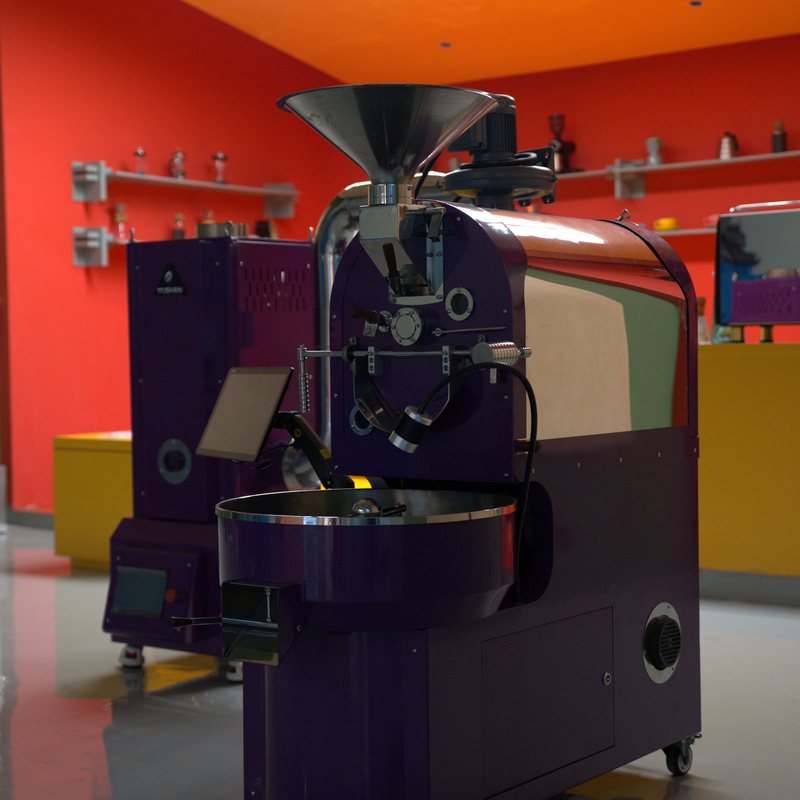
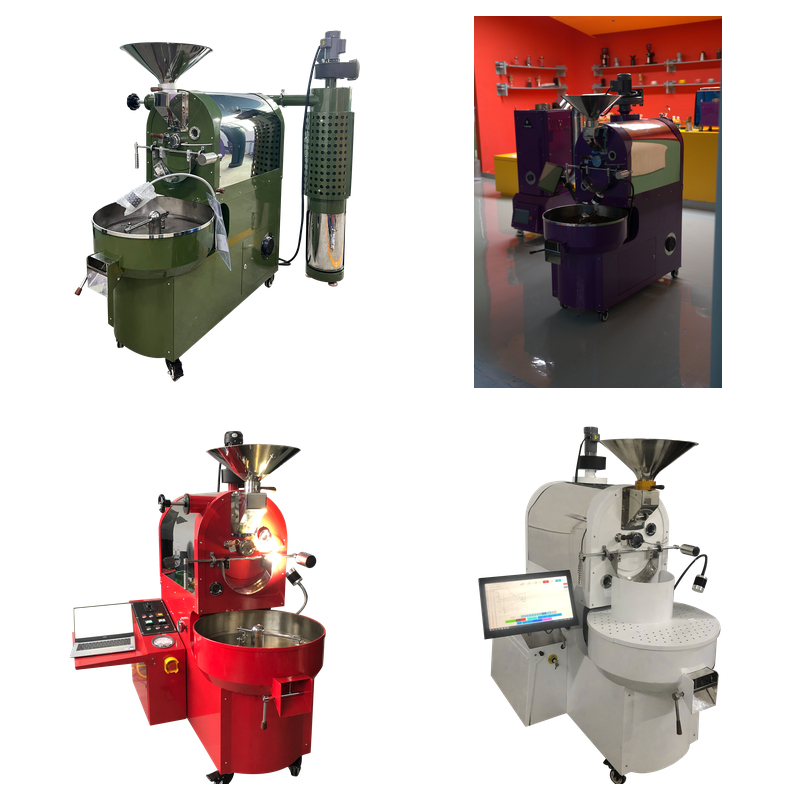
Tell us the body colour you want — matte black, white, blue, copper on black, deep purple — and where the logo goes. Drum-shell plating in stainless, gold or rose gold and logo printing are paid options on the 3kg coffee roaster; an unbranded machine with no branding at all costs nothing extra. Send a RAL code or a photo of your shop and we match it.
A Cast-Iron Drum, Made in Our Own Factory
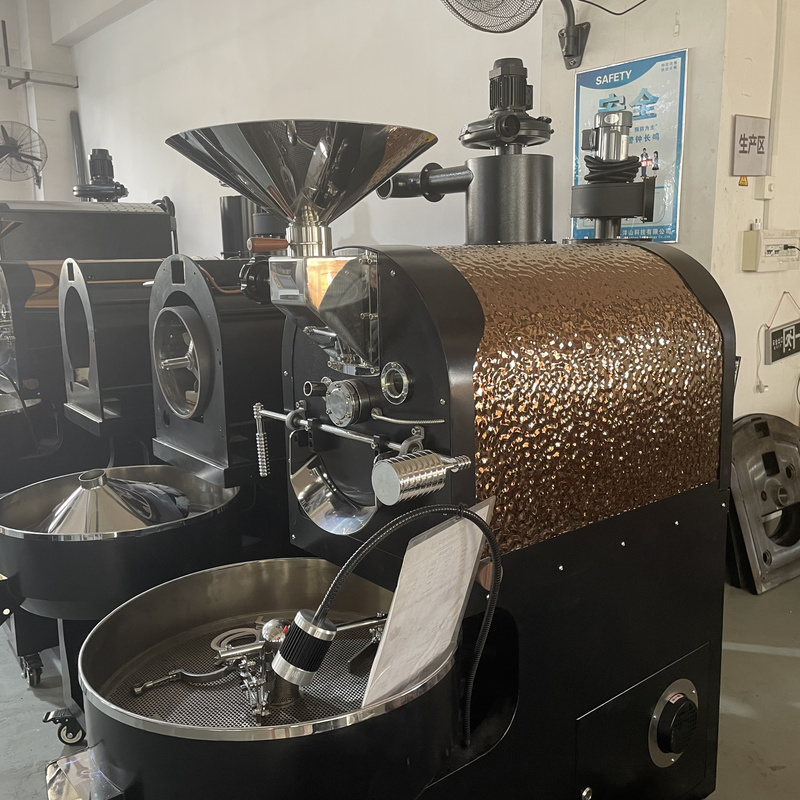
The SD series drum is cast iron, not rolled sheet, so it holds heat between batches and gives the bean-surface contact that direct-fire roasting needs. We machine and balance the drums ourselves in our Shenzhen plant — made in China by the factory, not a trader — and build every SD-3KG 3kg coffee roaster from that drum outward. You are welcome to visit the factory, or to ask for a customer reference in your region.
Certified: CE, RoHS, FDA Coating Report
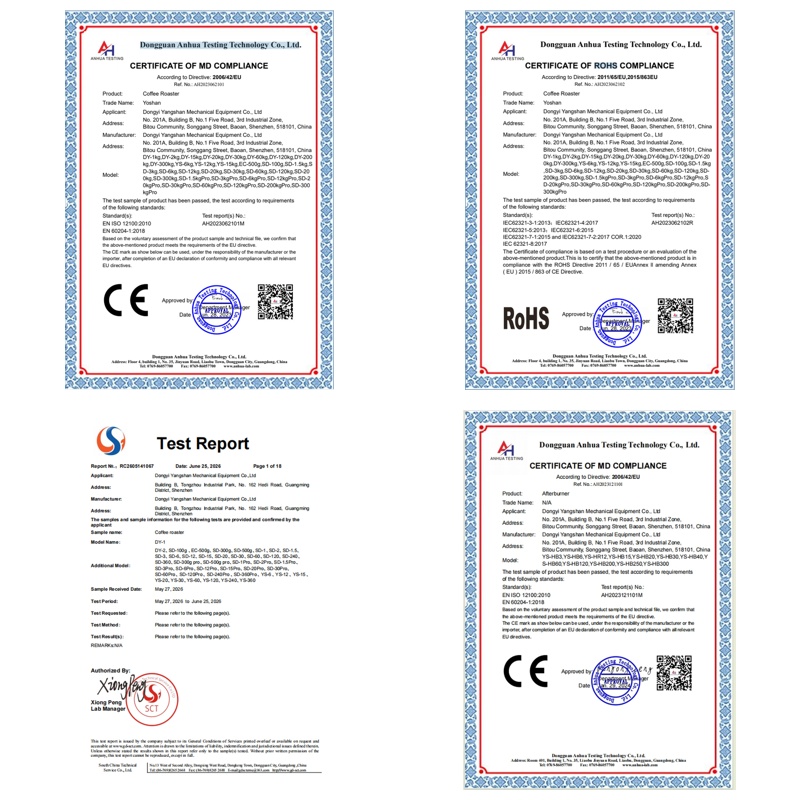
Yoshan roasters carry CE certification under the Machinery and Low Voltage Directives (AH2023062101), a RoHS report (AH2023062102), an FDA 21 CFR 175 coating test report (RC2605141067) and an SGS factory audit. Copies of every certificate for your 3kg coffee roaster go out with the quotation, and we confirm which burner documentation your inspector will accept before you order.
Next Size Up, Next Size Down, and the Series
Choosing a 3kg Coffee Roaster: Output, Heat Source and Landed Cost
What a 3kg Coffee Roaster Really Produces
A 3kg coffee roaster — a 3 kilo coffee roaster, or 6.6 lb — takes 2–3 kg of green coffee per batch. Green coffee loses weight in the drum, so you bag less than you load. At four batches an hour on the SD-3KG — 10–15 minutes roasting after a 180 °C preheat plus 1–2 minutes cooling — that is the 8–12 kg/h in the specification. Three roasting sessions of three hours give roughly 70–100 kg a week: enough for a busy café or a small wholesale round. Treat these as typical figures; roast level and bean density move them.
Gas or Electric at 3 kg
Gas is cheaper to buy and to run, and the gas SD-3KG only needs a 220 V socket. Electric makes sense when the room cannot have a flame or a cylinder, and the full hot-air versions add evenness on light roasts. The price gap on this page — USD 4,599 gas, 4,899 heater-tube, 6,199 full hot-air — is the whole decision; there is no hidden option list. Check three-phase availability before choosing hot-air electric.
Manual or Fully Automatic
The manual SD-3KG is a 3kg coffee roasting machine for an owner-roaster who wants to develop profiles by hand. The SD-3KG Pro is for the shop where roasting is one job among many, or the brand with several sites that must taste the same: USD 8,889 on gas, and it can still be driven by hand.
When 3 kg Is Too Small
If you are already roasting more than six full batches a day, or your weekly demand passes about 100 kg of roasted coffee, look at the 6kg roaster instead. Both share the SD design, so profiles and habits carry over; the difference is batch size and the burner. Starting on 3 kg and adding a 6 kg later is the path many of our customers take; the 3 kg stays as the sample and profile machine.
Where Our 3kg Coffee Roasters Run
Most requests for the SD-3KG and SD-3KG Pro come from cafés and micro-roasteries in the Philippines, the United States and Colombia, followed by the rest of Latin America, Australia and the Middle East. The machines come from our own factory in Shenzhen, not a trading supplier, so the reference we give you is a customer roasting on the same model — ask us for a customer reference in your region.
What Arrives in the Crate
The roaster with its chaff cyclone and cooling tray, the maintenance tool kit and the manual, in film inside a fumigated wooden crate. Colour, logo and any add-on you ordered are fitted before the test roast.
The SD-3KG gas model is USD 4,599 EXW Shenzhen; the fully automatic SD-3KG Pro gas model is USD 8,889 EXW. Both prices are the same for every buyer and include the chaff cyclone, tool kit and manual. Freight to your port, insurance and DDP delivery are quoted separately on the same quotation, so you see the landed cost before paying a deposit.
Yes, two ways. The SD-3KG comes with electric heater-tube heating at USD 4,899 — 220 V single-phase or 380 V three-phase depending on your country — or full hot-air electric heating at USD 6,199 on 380 V three-phase; the SD-3KG Pro full hot-air electric is USD 11,209 with 16 kW on 380 V three-phase. Tell us your address and we confirm the wiring before you order.
8–12 kg of roasted coffee per hour on the SD-3KG and 9–12 kg/h on the Pro, from 2–3 kg batches that take 10–15 minutes after a 180 °C preheat (6–12 minutes on the Pro) plus 1–2 minutes cooling. Three roasting sessions of three hours give roughly 70–100 kg a week — enough for a busy café or a small wholesale list.
Yes. It is the only fully automatic 3kg coffee roaster on this page: a PLC touchscreen stores your roast curves and repeats them batch after batch, and you can take over manually at any point. The standard SD-3KG is a push-button manual roaster with a digital temperature display; both share the cast-iron drum, the Pro's being double-layer.
Yes. The YS-JD-3k is an electrostatic filter (3,000 m³/h, sized for 1–3kg roasters): it takes the smoke and smell out of the exhaust so you can roast indoors, but the air still leaves through a duct. Where local rules require smokeless exhaust, the YS-HB3 gas afterburner (15,000–24,000 kcal/h) is the other add-on; both are made in our own plant.
Spare and wearing parts for the SD-3KG and Pro are stocked at the factory and sent by courier; within the one-year warranty a part that fails without human damage is replaced by air express at our cost. After that, send your serial number and a photo of the part on WhatsApp and we quote it the same day, with 24/7 lifetime technical support to fit it.
The gas SD-3KG needs 220 V single-phase; in 120 V countries it runs on a 220 V commercial circuit or a step-up transformer, quoted separately. The heater-tube electric SD-3KG is wired for 220 V single-phase or 380 V three-phase depending on your country; the full hot-air electric versions need 380 V three-phase. Electric roasters ship without a plug; your electrician wires them to an RCD.
The one-year limited warranty starts when you receive the goods: any part that fails without human damage is replaced, with spare parts sent by air express at our cost, plus 24/7 lifetime phone and online technical support and commissioning by video call. A two-year warranty is available for the SD series at USD 699 when you order.