
If you are choosing between a semi-automatic and a fully automatic coffee machine, most comparisons talk about control versus convenience. That is true and not much help. The question that actually decides it is simpler: who will be standing behind the counter at 7 a.m. on a Tuesday, and what do they know? Answer that, and your machine type follows — with one middle option most guides leave out.
The One Question
A trained barista, every shift? Semi-automatic. You are paying for skill; give it a machine that lets it show.
Staff who can learn milk but not espresso, or who rotate? Bean-to-cup semi-automatic — the machine grinds and doses, the person handles milk and service.
Nobody dedicated — a hotel breakfast, an office, self-service? Fully automatic. One touch, consistent, no training beyond cleaning.
Every other factor — speed, consistency, cost — follows from your answer.
What Each Type Asks of Your Staff
Semi-automatic. The barista grinds, doses, tamps, locks in, starts and stops the shot, and steams milk. Every variable is theirs, which is why the best espresso comes off these machines and why the worst does too — your staff decide which you serve. Your training budget is weeks to competence, months to excellence. Our SD-103 (USD 1,999 ex-works) and YS-3120 class machines are this type.
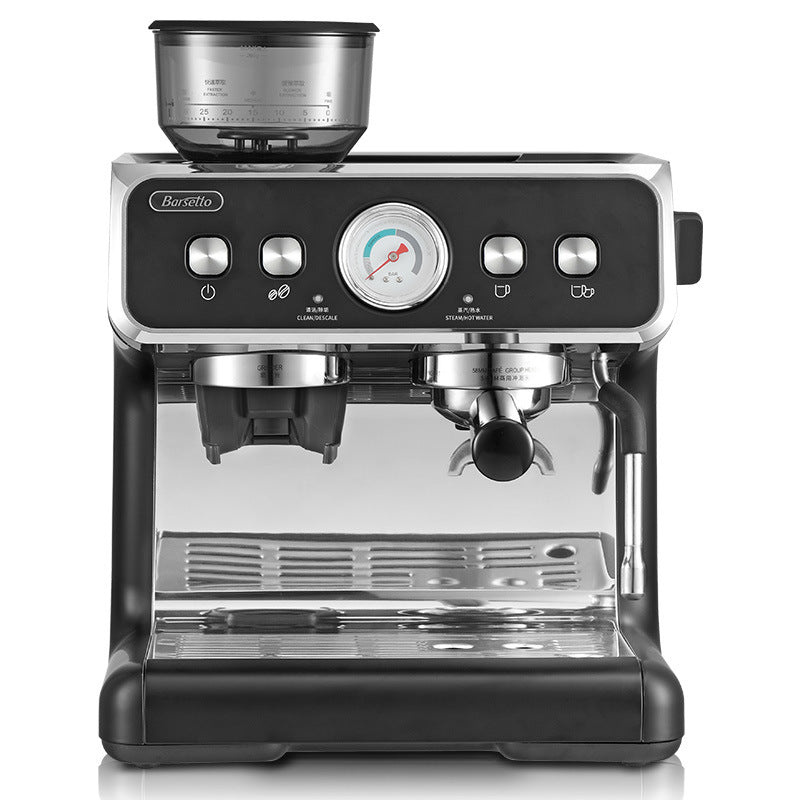
Bean-to-cup semi-automatic. The machine has a grinder built in and doses the shot; the staff member starts it and steams milk. It removes the two steps where your untrained staff go wrong — grind and dose — and keeps the visible craft. Training takes days. Our YS-BAE01 and BAE02 (USD 459 / 609) are this type.
Fully automatic. Grind, brew, milk, cup — one button. Consistent every time, indifferent to who pressed it. Your training is an hour, mostly on cleaning. Our YS-EB2016 (USD 589) is this type.
Side by Side
| Semi-automatic | Bean-to-cup semi-auto | Fully automatic | |
|---|---|---|---|
| Who runs it | Trained barista | Anyone after a few days | Anyone after an hour |
| Espresso quality ceiling | Highest | High | Good, consistent |
| Consistency across shifts | Depends on staff | High | Highest |
| Speed at peak | Fast with two baristas | Fast, one person | Fast, but one drink at a time per group |
| Milk | Steamed by hand | Steamed by hand | Automatic |
| Daily cleaning | Backflush, wand, group | Backflush, grinder hopper, wand | Milk system rinse cycles, brew unit |
| Running cost | Lowest per drink | Low | Higher (milk system, service intervals) |
| Where it fits | Specialty cafe, busy coffee bar | Cafe with rotating staff, hotel lobby, bakery | Office, hotel breakfast, self-service, canteen |
Matching the Type to Your Site
- Specialty cafe with a barista team: a 2-group semi-automatic, or a 3-group past 150 drinks an hour. See the buyer's guide for sizing.
- Cafe or bakery where the owner cannot be there every shift: bean-to-cup semi-automatic — you keep the espresso quality while the shift changes.
- Hotel: often two machines — semi-automatic at the bar, fully automatic at breakfast.
- Office or canteen: fully automatic, sized to your cups per day, with a milk system your cleaner can manage.
- Kiosk or cart with no plumbing: a tank-fed semi-automatic such as our YS-Tank.
All of these are on the commercial coffee machine page, with the YS-BAE01 and YS-EB2016 on their own pages.
The Mixed Answer Most Guides Miss
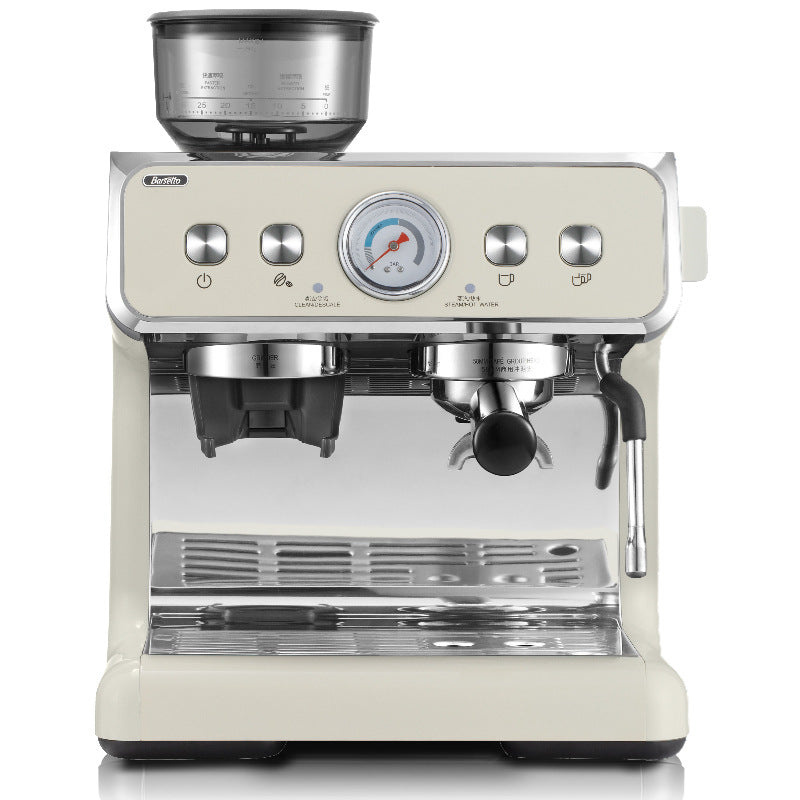
Your site may need two types, not one. A hotel that runs a semi-automatic at the bar and a fully automatic at breakfast; a cafe chain that puts bean-to-cup in new stores until the staff are trained, then upgrades. Buying from one supplier makes this easy for you — the same voltage, the same document pack, the same spares route — which is one reason dealers take a range rather than a single model. The wholesale guide explains how.
What Each Type Costs to Keep Running
The purchase price is the smaller difference. The bigger one is what the machine asks of you every month after it lands.
A semi-automatic is modular: groups, pumps, valves and elements are separate parts that a technician swaps in an hour, and the daily routine is a backflush and a wand wipe your baristas do at close. Servicing budgets in the trade run at roughly 3–6% of the machine price a year, and on a USD 1,999 3-group that is small money.
A fully automatic is a sealed system: a brew unit, a grinder and a milk circuit that have to be cleaned on the machine's own cycles every day and serviced by someone who knows that model. Miss the milk cycle and the machine stops serving; that is the trade you make for needing no barista. Many operators lease fully automatics with a service contract for exactly this reason, and the lease plus contract is the number you should compare, not the sticker.
Bean-to-cup semi-automatics sit between the two: a built-in grinder to keep clean, but the milk is still steamed by hand, so there is no milk circuit to fail.
One more difference that only shows at the rush: a fully automatic serves one drink at a time per group, start to finish, milk included. Two baristas on a semi-automatic run shots and milk in parallel. At 150 drinks an hour that parallel workflow, not the machine's rated speed, is what keeps your queue moving.
Frequently Asked Questions
Can a fully automatic machine be used on a specialty menu at all?
For a hotel breakfast or an office, yes, and nobody will complain; for a bar that sells single origins, no — the customer who orders a single origin is paying for the barista's hands. Where the two meet is the second machine: a fully automatic on a self-service counter beside a semi-automatic at the bar, which is how many hotels and larger cafes run.
How long does staff training take on each type?
On a fully automatic, an hour, mostly on the cleaning cycles; on a bean-to-cup semi-automatic, a few days to learn milk; on a semi-automatic, weeks to competence and months to a barista you would put on the Saturday rush. Plan the training into the opening schedule, and plan the machine around the staff you can actually keep rather than the ones you hope to hire.
What about milk alternatives on automatic milk systems?
Oat and soy foam differently from dairy and can coat a milk circuit, so check that the fully automatic you are considering has adjustable milk settings and a rinse cycle that clears them; on a semi-automatic the barista simply steams differently. If more than a third of your milk drinks are plant-based, that is an argument for hand-steamed milk on a bean-to-cup semi-automatic.
Which type is easiest to lease or finance?
Fully automatics are commonly leased with a service contract, because the maker's technician needs to know the model; semi-automatics are more often bought outright, because a local technician can service them. Either can be financed; the question to ask is what the monthly figure includes, because a lease that bundles service is comparing against a purchase price that does not.
How do I know when a machine is undersized for my counter?
When the queue forms at the milk, not at the till: pressure sags after three jugs, the second barista waits for the wand, drinks go out lukewarm at the rush. That is a boiler or a group question, not a type question — a 3-group semi-automatic such as the SD-103 at USD 1,999 is the answer for a milk-heavy bar with two baristas.
Final Thoughts
Semi-automatic if you have baristas, bean-to-cup if you have staff who can learn milk, fully automatic if you have nobody dedicated — that is the whole decision. We supply all three types, and many sites take two. Tell us who will be behind the counter and how many drinks a day, and we will match the machine. Get a wholesale quote.
Get a Quote → WhatsApp +86 184 0771 4607Last updated: September 17, 2026
Pingback: Espresso Machine Maintenance and Descaling: Keep the Warranty | Yoshan
Pingback: Commercial Espresso Machine Price: What Moves the Number | Yoshan