
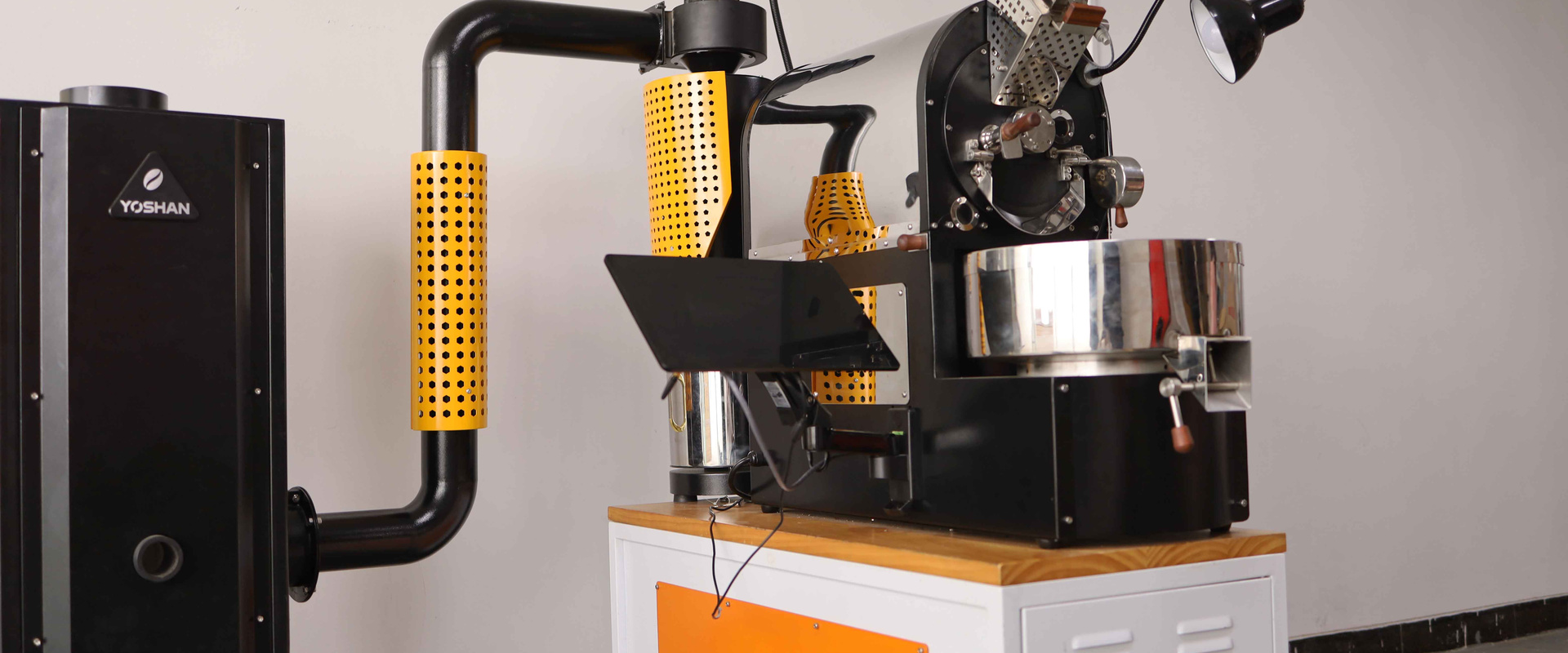
If you are thinking about how to start a coffee roasting business, you have probably read guides that begin with a business plan and end with a marketing section. This one starts somewhere else: with the number of kilos you can sell in a week. Get that right and the roaster, the space, the budget and the paperwork all follow from it — including the part most guides skip, which is getting the machine into your country and running.
Start With One Number: Kilos Per Week
Before you look at a single machine, answer this: how much roasted coffee can you sell in a week, starting in month three?
If you already run a cafe, you know it — count the bags you buy from your current roaster. If you are starting from scratch, count the accounts you can realistically sign: your own counter, two or three cafes that have said yes, a market stall, an online shop. Put a weekly figure on each and add them up.
That number decides everything. Under 25 kg a week is a learning operation. 25–60 kg is a real small business on a 3 kg drum. 60–150 kg is a cafe plus wholesale on a 6 kg drum. Above that you are sizing a roastery, and our small business sizing guide takes over.
Do not skip this because the number feels small. A small honest number beats a big hopeful one, because it is the number you will buy a machine against.
Pick a Model You Can Actually Run
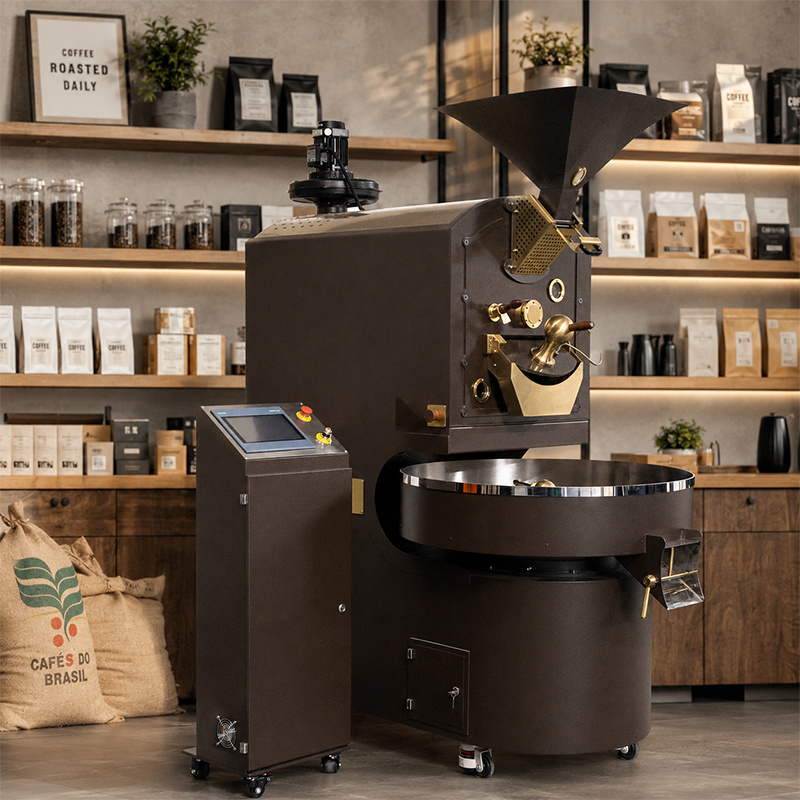
There are three ways to make money roasting coffee, and they need different machines, different space and different amounts of your time.
Roasting for your own cafe. You already have the customers; roasting cuts what you pay per kilo by half or more and gives you a story to sell. Volume is predictable. The machine sits in or near the shop. This is the lowest-risk way in, and where most of our first-time buyers start.
Wholesale to other cafes and shops. Steadier volume, thinner margins — published industry figures put wholesale gross margins around 44%, against 65% for a roaster selling its own retail. You need a dedicated space, a bigger drum, and someone whose job is roasting. Every account you sign moves the machine size up.
Retail bags online or at markets. Highest margin per bag, hardest to predict. Works well as a second channel on top of one of the first two, rarely as the only one.
Combined models earn the best net margins in the industry data, but only once the base is stable. Pick one to launch with. Add the second when the first is boring.
Size the First Machine to the Model, Not the Dream
The temptation is to buy the machine you want to have in three years. Buy the one your weekly number needs now, with room for one step of growth. Here is how the models map onto our range:
| Your launch model | Weekly roasted volume | First machine | What it gives you |
|---|---|---|---|
| Learning and testing accounts | Under 25 kg | DY-1 or DY-2 | 0.2–2.5 kg batches, gas or electric, runs on single-phase 220–240V, fits in a shop corner — USD 2,599 / 3,399 ex-works |
| Cafe roasting its own coffee | 25–60 kg | SD-3 | 2–3 kg batches, 8–12 kg an hour, cast iron drum, one roasting afternoon covers the week — USD 4,599 |
| Cafe plus wholesale accounts | 60–150 kg | SD-6 Pro or YS-6 | 5 kg working batches, 18–28 kg an hour, PLC touch-screen recipes so a second person can run it — USD 12,999 / 7,499 |
| Wholesale as the business | 150 kg and up | SD-12 Pro and above | Loader, dedicated room, and the production line thinking starts |
One factor most guides get wrong: they assume a full-time roaster. If you are the owner, the barista and the bookkeeper, plan on roasting four hours on a good day, not eight. Size against the hours you will genuinely have — the maths is in the sizing guide.
Whatever size you land on, buy a drum rated a little above your batch, because drums roast best at 60–80% of their rating. A 5 kg batch belongs on a 6–7 kg drum, which is why our machines in that class are the SD-6 Pro and YS-6.
The Space and the Utilities
You do not need a large space for a 3–6 kg drum. You need three things in it:
- Power that matches the machine. Gas-heated drums up to 15 kg run on single-phase 220–240V — the electrical load is just the motor, fans and controls. Electric-heated machines need more: a DY on electric heating draws over 4 kW and needs a proper circuit; an electric SD Pro needs three-phase. Send us what comes out of your wall before you order, not after. The voltage guide explains what to look for.
- Fuel. Bottled LPG or piped natural gas. The burner is jetted for one or the other, and swapping later means new jets and a re-tune.
- Somewhere for the smoke to go. A chaff cyclone plus a duct to outside air is the minimum. Whether you also need an afterburner or an electrostatic filter depends on your local rules and your neighbours — settle it before you sign a lease, not after. The ventilation guide covers it.
Add somewhere cool and dry for green coffee, off the floor, and a floor that takes 130–600 kg of machine plus beans. If you are still choosing the site, our roastery layout guide has the dimensions by machine size.
Local licensing — food registration, fire inspection, whatever your municipality treats roasting as — varies too much by country for anyone to give you a list. Ask your local authority the question directly: "I am installing a commercial coffee roaster of X kg; what do you need from me?" Do it before the machine ships.
The Second Supplier You Need Before the Machine: Green Coffee
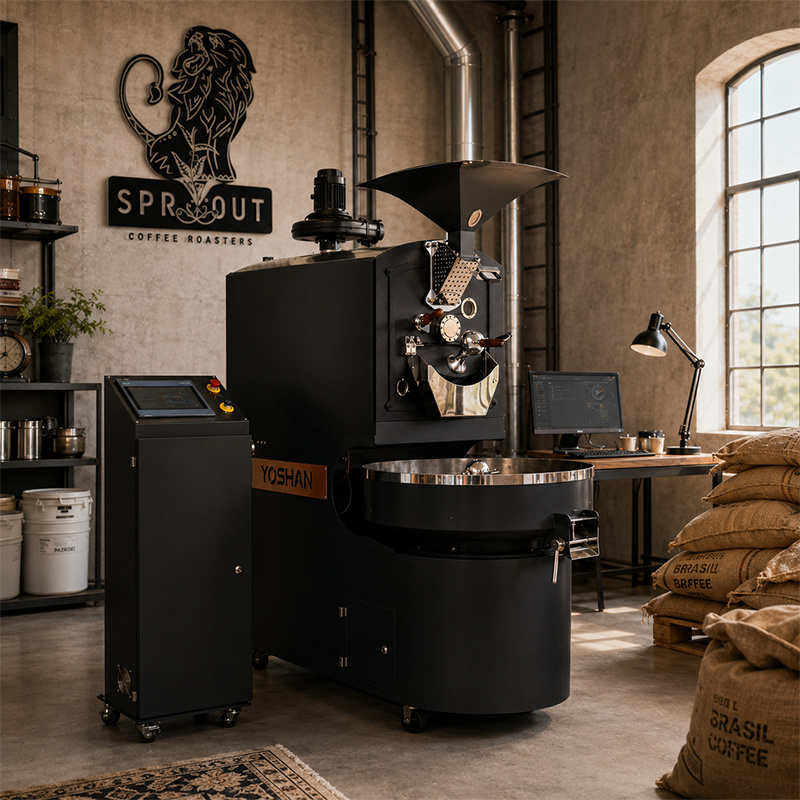
Every guide tells you to find a roaster. Fewer tell you that the green coffee supply is the harder relationship, and it should be in place before the machine ships, because your first month of practice batches needs beans.
Line up three sources, not one. A specialty importer in your region for the bulk of your volume, a direct or cooperative source if you can find one for the coffee that becomes your story, and a backup — because the lot you built a blend on will sell out mid-season. Most importers run sample programmes for small buyers: ask for 200–300 g samples, roast them on the sample roaster or in small batches on your drum, and cup before you commit to a sack.
Know the price bands. Published trade figures put bulk specialty green at roughly USD 3–8 per pound from importers, commodity grade from about 1.50, and micro-lots at 10–15 and up. Your green cost per roasted kilo is that price divided by 0.82 for the roasting loss — the number that goes into every pricing decision you make.
Price the bag from the green, not from the competition. Retail bags in most markets carry a 30–40% margin for the roaster; wholesale accounts expect to buy at 35–50% below the shelf price and still make their own margin. Work backwards from the price your market will pay per bag, take off packaging and the retailer's share, and check what is left covers green at your cost plus gas and your time. If it does not, the answer is a different coffee or a different channel, not a bigger machine.
The Step Every Guide Skips: Getting the Machine In
Most of what is written about starting a roastery is written by local dealers, so this step never appears. If you are importing from the factory, it is the step that makes or breaks your launch date. Here is how it actually goes:
- Specification. You tell us your weekly volume, your voltage and frequency, your gas type, your destination port, and whether you want colour or branding. We confirm the model and the build.
- Quote and delivery term. The quote states whether it is EXW (factory gate), FOB (loaded on the ship) or CIF (delivered to your port with insurance). Read that line before you read the price — it is the reason two quotes for the same machine can differ by a third.
- Deposit, build, balance. A deposit on order, the balance before shipment, is the standard practice in this trade. Build time depends on customisation: custom colour and electric builds take longer than a standard gas machine.
- Shipping and clearance. Sea freight to your port takes weeks, not days. Your customs agent clears it; we supply the documents. Duty depends on your country, not the machine — price it early. The shipping guide has the timeline.
- Installation and first roast. Your electrician and gas fitter connect it; we walk you through first start-up and drum seasoning by video. Season the drum before your first saleable batch — the commissioning guide shows how.
Budget this whole chain at the start. It is where launch dates slip.
The First Three Months
You will not sell your first twenty batches. Budget green coffee for learning — a DY or SD-3 is forgiving, but nobody roasts well in week one. Two things shorten the curve: roast the same coffee repeatedly until you can hit the same result, and log every batch (both series can log to Artisan).
Keep a sample of every batch you sell. Cup it a week later. That habit, more than any piece of equipment, is what turns a machine owner into a roaster.
And keep one number in front of you the whole time: kilos sold per week. When it passes the top of your machine's comfortable range for three months in a row, it is time to talk about the next size.
Frequently Asked Questions
How much cash should I have beyond the machine before I start?
Three things the machine price does not include: a month of practice green and your first real stock (two to three sacks for a 3 kg start), the installation lines — duct, gas fitter or circuit, a destoner if you buy naturals — and the gap between delivering to a wholesale account and being paid, which is typically 30–60 days. Most first-year roasteries that struggle are short on the third, not the first.
What should my first three coffees be?
One house blend or single origin for espresso that you can buy in volume all year, one filter coffee, and one rotating single origin for interest — three, not eight, because every coffee needs its own profile, its own green stock and its own bag, and rotating too many leaves you dialling in instead of selling. Add the fourth when the first three repeat without you thinking about them.
Do I need a food business licence to roast and sell coffee?
In most countries, yes: roasting is food production, so you register with the local food authority before you start, keep a basic hygiene plan, and label bags with the roaster's name, net weight and a date. It is usually free and low-risk, but it is a gate, and an inspector visiting an unregistered roastery is an easy enforcement target. Ask your municipality the week you sign the lease.
Should I roast under my own brand or roast for others first?
Toll-roasting — roasting other people's green on your machine for a fee — fills the drum while your own accounts grow and teaches you volume without the green-coffee cash tied up in stock. It pays less per kilo than your own bags and it does not build your brand, so most roasteries use it as a bridge for the first year, not a business.
When do I hire someone?
When roasting takes you off the counter during hours you were selling. On a 3 kg drum that is usually never in year one; on a 6 kg drum roasting three afternoons a week it comes around the time the accounts pass a dozen. Hire for the packing and delivery first — it needs no training — and keep the roasting yourself until a saved profile lets someone else repeat it.
Final Thoughts
Start from the kilos you can sell in a week, choose the model you can run, and size the first machine to that with one step of growth. We build every size from 1 kg to 300 kg at our own factory and have walked hundreds of first-time roasters through the import and first roast. Send us your weekly number, your voltage and your country, and we will map the rest. Talk to our engineers.
Get a Quote → WhatsApp +86 184 0771 4607Last updated: September 23, 2026